Our pick. Jade Leaf
Check priceBest Tea for Studying 2026: Caffeine + L-Theanine, Ranked
The seven teas we picked for long focus sessions, from a 60 mg matcha bowl down to a zero-caffeine midnight peppermint, with the honest published caffeine math for every pick.
By The Best Tea Bags Desk~12 min readUpdated
Quick answer: Best overall for studying: Jade Leaf ceremonial matcha, about 38 to 88 mg caffeine per 2 g bowl (typically 60 to 70) plus the highest L-theanine of any tea format, $22.99 at the July 22, 2026 price.
Our top pick.Best Tea for Studying Overall
Jade Leaf Matcha Ceremonial Grade, Teahouse Edition (30g)
- Price.
- $22.99 (30g, ~15 bowls)
- Our rating.
- 4.7 out of 5
The maximum caffeine-plus-L-theanine dose tea can deliver, whisked fresh in two minutes before a deep-work block.
Not sure yet? Compare all 7 picks below ↓
The best tea for studying is matcha, and our pick is Jade Leaf's ceremonial Teahouse pouch: a standard 2 gram bowl delivers roughly 38 to 88 mg of caffeine (typically 60 to 70) together with the highest L-theanine dose of any tea format. Tea's advantage over coffee for deep work is the pairing: caffeine for alertness plus L-theanine, an amino acid found almost uniquely in tea leaves, which drinkers consistently describe as smoothing the lift into calm, steady focus rather than a spike and crash. Published analyses put L-theanine at roughly 6 to 46 mg in a typical brewed cup, and matcha at the top of that range because you drink the whole powdered leaf.
But a study session is not one drink. A 9 a.m. deep-work block, a 3 p.m. problem set, and an 11 p.m. review before an exam want different caffeine loads, so this guide is ranked as a day: matcha and sencha for the heavy lifting, a malty black for the morning grind, genmaicha and hojicha for the afternoon fade, and a proper zero-caffeine pick for late-night reading that still lets you sleep. Every caffeine figure below is a published range (USDA FoodData Central per-cup values and the peer-reviewed 19 to 44 mg per gram matcha range), not a number we invented; the full conversion tables live in our tea caffeine chart and matcha caffeine guide.
Prices shown were read through the Amazon Creators API on July 22, 2026 and change often. We are reader-supported and may earn a commission through our links; rankings are never for sale.
The short version.
- Best bagged pick: Rishi Sencha sachets, whole-leaf Japanese green tea in the 15 to 45 mg per cup range, $9.99.
- Best for a caffeine-tolerant morning grind: Yorkshire Red, a 40 to 70 mg malty black cup at about 7 cents a bag in the 240-count box.
- Best afternoon taper: Yamamotoyama Genmaicha, green tea cut with roasted rice, so each cup lands at the gentle end of the green range.
- Best zero-caffeine, keep-reading pick: Buddha Teas Organic Peppermint, 0 mg, for the late-night session before an early exam.
- The science framing, honestly: L-theanine is why tea drinkers describe calm focus rather than coffee jitters; published cup analyses run roughly 6 to 46 mg, with matcha and shade-grown greens at the top.
| Pick | Best for | Caffeine (8 oz) | Live price |
|---|---|---|---|
| Jade Leaf Ceremonial Matcha | Deep-work sessions | 38 to 88 mg per 2 g bowl | $22.99 |
| Rishi Sencha Sachets | Best bagged pick | ~15 to 45 mg | $9.99 |
| Yorkshire Red, 240 ct | Morning grind, high tolerance | ~40 to 70 mg | $16.20 |
| Twinings Earl Grey, 100 ct | Steady all-day desk tea | ~40 to 70 mg | $15.94 |
| Yamamotoyama Genmaicha | Afternoon taper | low end of green range | $13.27 |
| Sugimoto Hojicha | Evening study | low; roasted green | $17.99 |
| Buddha Teas Peppermint | Late night, zero caffeine | 0 mg | $8.99 |
The best teas for studying at a glance, Amazon prices as of July 22, 2026; caffeine figures are published per-cup ranges, not lab tests of these boxes
Jade Leaf Matcha Ceremonial Grade, Teahouse Edition (30g)
Jade Leaf
The maximum caffeine-plus-L-theanine dose tea can deliver, whisked fresh in two minutes before a deep-work block.
Bottom line: Matcha is the study tea because you drink the whole leaf: the most caffeine and the most L-theanine per cup of any format, and the combination is what steady, jitter-free focus feels like. Jade Leaf's Teahouse pouch is the best daily-habit price on real ceremonial grade.
Origin and grade. USDA Organic certified first-harvest Japanese matcha from Uji and Kagoshima, per the brand.
For a two-to-three-hour focus block, nothing in tea touches a properly whisked bowl of matcha. Because the powdered leaf is consumed whole rather than steeped and discarded, a standard 2 gram bowl carries roughly 38 to 88 mg of caffeine (typically 60 to 70), per the published 19 to 44 mg per gram laboratory range, along with the highest L-theanine content of any tea format, concentrated by the shade-growing that defines matcha.
Jade Leaf's Teahouse Edition is first-harvest, USDA organic, and smooth enough to drink plain, at about $1.53 a bowl. Whisk it at 175°F, not boiling, and see our matcha method if it is your first tin.
Who should buy it.
Anyone whose study sessions run long enough that a coffee spike-and-crash costs them the second hour.
What we don't like.
Two minutes of whisking is real friction at a library desk; the bagged picks below travel better.
- Type
- Matcha (powdered green tea)
- Caffeine (2 g bowl)
- 38 to 88 mg, typically 60 to 70
- L-theanine
- Highest of any tea format
- Certification
- USDA Organic
- Size
- 30g (~15 bowls)
What we like.
- Strongest focus dose in tea
- Ceremonial grade at a habit price
- USDA organic, first harvest
Worth noting.
- Needs a whisk and a minute
- Fades within weeks of opening

Rishi Tea Sencha, Organic Sachet Bags (15 ct)
Rishi Tea
Whole-leaf Japanese sencha in a sachet: the matcha effect at desk-friendly convenience, no whisk required.
Bottom line: Sencha is the steeped tea closest to matcha's focus profile, real Japanese green leaf with meaningful L-theanine, and Rishi's organic sachets are the best bagged version we have found. Drop one in a mug between classes and you are working in three minutes.
Origin and grade. USDA Organic certified Japanese sencha in whole-leaf sachets, per the brand.
If the whisk is a dealbreaker, sencha is the answer. Steeped green tea lands at roughly 15 to 45 mg of caffeine per 8 oz cup (USDA's typical brewed value is about 28 mg), gentler than black tea, and Japanese greens carry more L-theanine than most steeped teas, which is why a cup of good sencha reads as clear-headed rather than wired.
Rishi's whole-leaf sachets give the leaf more room to open than flat-paper green bags do; the difference shows up in sweetness by the second steep, and each sachet resteeps once, which puts the real per-cup price near 33 cents. More green rankings in our best green tea guide.
Who should buy it.
Students and desk workers who want the green-tea focus profile with tea-bag convenience.
What we don't like.
Fifteen sachets go fast during finals week, and it needs cooler water than a kettle's boil.
- Type
- Green tea (Japanese sencha)
- Caffeine (8 oz)
- ~15 to 45 mg
- Format
- Whole-leaf sachets
- Certification
- USDA Organic
- Count
- 15 sachets
What we like.
- Closest bagged tea to matcha's profile
- Resteeps well
- No gear beyond a mug
Worth noting.
- Small box
- Unforgiving of boiling water

Yorkshire Tea Red, Pillow Tea Bags, 240 Count
Yorkshire Tea
The 7-cents-a-cup malty black that fuels a 9 a.m. deep-work block the way coffee does, minus most of the crash.
Bottom line: For the caffeine-tolerant morning studier, a proper builder's brew is the honest pick: black tea's 40 to 70 mg per cup is the strongest steeped dose on this list, and Yorkshire's 240-count box makes it the cheapest focus per dollar we can verify.
Origin and grade. Blended in Harrogate from Assam, Kenyan, and Rwandan leaf; Rainforest Alliance Certified sourcing per the brand.
Sometimes the study problem is not jitters, it is a 9 a.m. lecture after a 1 a.m. night, and that is a job for black tea: roughly 40 to 70 mg per 8 oz cup, the top of the steeped range. Yorkshire Red brews thick, malty, and fast, takes milk without dying, and the 240-bag box works out to about 7 cents a cup, which matters on a student budget more than any tasting note.
Steep 3 to 4 minutes at a full boil; longer steeping extracts more caffeine, so a 5 minute mug is a deliberate choice before an exam. The full brand story is in our Yorkshire Tea review.
Who should buy it.
Caffeine-tolerant morning studiers, and anyone stocking a semester's tea drawer on one purchase.
What we don't like.
No meaningful L-theanine edge over other blacks, and oversteeped it turns tannic enough to want milk.
- Type
- Black tea blend
- Caffeine (8 oz)
- ~40 to 70 mg
- Count
- 240 bags
- Per cup
- ~7 cents
- Sourcing
- Rainforest Alliance Certified
What we like.
- Strongest steeped caffeine here
- About 7 cents a cup
- Fast, forgiving brew
Worth noting.
- Crash risk is real past two mugs
- Bitter if forgotten in the mug

Twinings Earl Grey, 100 Count
Twinings
The bergamot black that makes cup three feel like a ritual instead of a refill, wrapped bags built for a backpack.
Bottom line: Long study days are won by the tea you will actually keep drinking. Earl Grey's bergamot lift keeps a black-tea caffeine load interesting across a whole afternoon, and Twinings' individually wrapped bags survive a semester in a backpack pocket.
Origin and grade. Black tea scented with bergamot; Twinings has blended Earl Grey since the 1830s.
The unsung study variable is monotony: by hour four, plain black tea number three tastes like obligation. Earl Grey fixes that with bergamot's citrus aromatics on the same roughly 40 to 70 mg black-tea base, so the ritual of the next cup stays appealing, which is what actually keeps a session going.
At $15.94 for 100 bags it is about 16 cents a cup. If you fall for the style, our Earl Grey ranking covers the upgrades, and the Twinings review rates the rest of the lineup.
Who should buy it.
All-day studiers who burn out on plain black tea, and anyone who wants a stash that lives in a bag.
What we don't like.
Bergamot is polarizing with milk, and the standard blend is mild next to a double-bergamot Earl Grey.
- Type
- Black tea, bergamot scented
- Caffeine (8 oz)
- ~40 to 70 mg
- Count
- 100 wrapped bags
- Per cup
- ~16 cents
- Heritage
- Twinings, est. 1706
What we like.
- Keeps long sessions interesting
- Wrapped bags travel and keep
- Full black-tea caffeine
Worth noting.
- Bergamot divides the room
- Mild for Earl Grey devotees
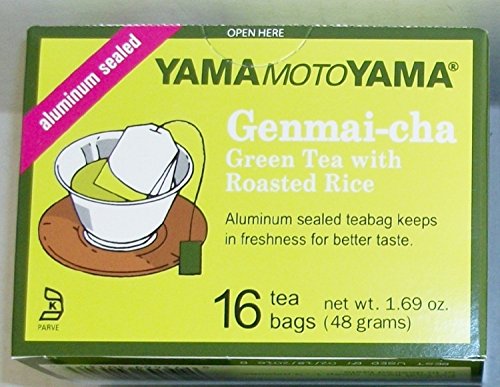
Yamamotoyama Genmai-cha, 16 Bags x 3 Boxes
Yamamotoyama
Green tea cut with toasted rice: a gentler caffeine landing for the 3 p.m. session that should not wreck tonight's sleep.
Bottom line: Genmaicha is the smart afternoon study tea: because roasted rice replaces part of the leaf in every bag, each cup lands at the gentle end of green tea's range, and the toasty, popcorn-sweet flavor needs no sugar at all.
Origin and grade. Japanese green tea blended with roasted brown rice, from the 330-year-old Tokyo tea house Yamamotoyama.
The 3 p.m. problem is arithmetic: caffeine lingers for hours, so a strong 4 o'clock cup is still with you at bedtime. Genmaicha solves it by dilution, the blend is green tea plus roasted brown rice, so a bag brews noticeably gentler than a full-leaf green, at the low end of the 15 to 45 mg range.
Yamamotoyama has roasted this blend for generations, and the 3-box pack lands under 28 cents a cup. Full brand rundown in our genmaicha guide and Yamamotoyama review.
Who should buy it.
Afternoon and early-evening studiers protecting their sleep, and green-tea skeptics who find sencha grassy.
What we don't like.
Too gentle to carry a groggy morning on its own, and the toasted-rice flavor is a specific taste.
- Type
- Green tea + roasted rice
- Caffeine (8 oz)
- Low end of green range
- Count
- 48 bags (3 x 16)
- Per cup
- ~28 cents
- Water
- Forgiving, ~175 to 200°F
What we like.
- Gentler caffeine by design
- Toasty, no-sugar-needed flavor
- Very forgiving brew
Worth noting.
- Not a morning workhorse
- Distinctive taste to acquire
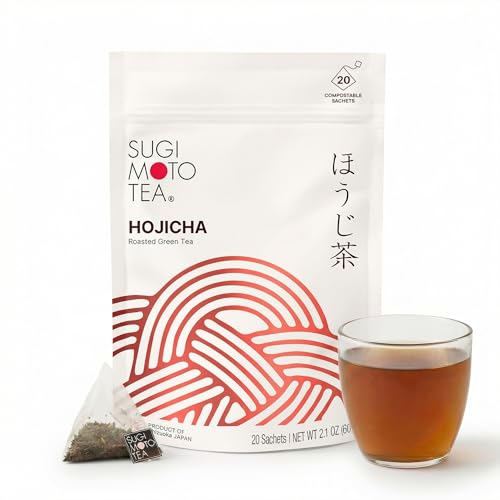
Sugimoto Tea Japanese Hojicha, Roasted Green Tea Bags, 20 Count
Sugimoto Tea
Roasted until it tastes like a coffee shop and drinks like a whisper: the classic Japanese evening tea.
Bottom line: Hojicha is what Japanese households pour after dinner for a reason: roasting green tea reduces its caffeine while adding deep, coffee-adjacent toastiness. It is the evening review session's tea, warm and dark without keeping you up like a black tea would.
Origin and grade. Japanese green tea roasted (hojicha style) by Sugimoto, a Shizuoka tea company founded in 1946.
Hojicha is green tea roasted over high heat, and the roast does two useful things: it develops a dark, toasty, almost-coffee flavor that satisfies an evening craving, and it reduces the leaf's caffeine relative to unroasted green, which is why it is Japan's traditional after-dinner and children's tea. For a 7 to 10 p.m. review session, that combination is exactly right: comforting enough to keep you at the desk, light enough to let you sleep after.
Sugimoto's bags are the best straight hojicha we found, brewed with fully boiling water for 30 seconds to a minute. More on the style in our hojicha guide.
Who should buy it.
Evening studiers who want something darker than herbal tea but lighter than black, and reformed after-dinner coffee drinkers.
What we don't like.
At 90 cents a bag it is the priciest steep on this list, and true caffeine-zero readers still need the peppermint.
- Type
- Roasted green tea (hojicha)
- Caffeine (8 oz)
- Low; reduced by roasting
- Count
- 20 bags
- Brew
- Boiling water, 30 to 60 sec
- Origin
- Shizuoka, Japan
What we like.
- Coffee-adjacent evening flavor
- Traditional low-caffeine choice
- Fast, foolproof brew
Worth noting.
- Priciest per cup here
- Not fully caffeine-free
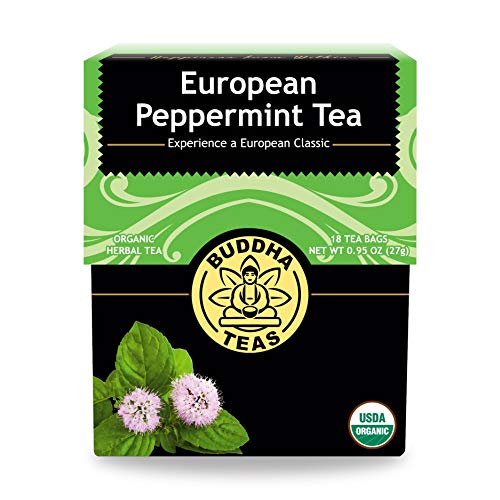
Buddha Teas Organic European Peppermint, 18 Bags
Buddha Teas
Zero caffeine, all menthol brightness: the tea that keeps a midnight reading session pleasant without costing you tomorrow.
Bottom line: Past a certain hour the right caffeine dose is none, and peppermint is the herbal that still feels sharp instead of sleepy. Buddha Teas' single-ingredient organic leaf is the crispest bagged peppermint we have reviewed.
Origin and grade. USDA Organic certified single-ingredient peppermint leaf in bleach-free bags, per the brand.
The last study shift of the night has a specific requirement: 0 mg. Peppermint is a true herbal, no tea leaf, no caffeine at all, but unlike chamomile it reads bright and cool rather than drowsy, which is why it is the classic pick for reading late without fighting your own drink.
Buddha Teas uses nothing but organic peppermint leaf in a bleach-free bag, and it steeps strong in 4 minutes. Wider herbal options are in our peppermint ranking.
Who should buy it.
Late-night studiers, the caffeine-sensitive, and marathon-day drinkers who need a between-cups reset.
What we don't like.
No caffeine means no lift; this keeps a session comfortable, it does not power one.
- Type
- Herbal (peppermint leaf)
- Caffeine
- 0 mg
- Certification
- USDA Organic
- Count
- 18 bags
- Bag
- Bleach-free
What we like.
- Truly zero caffeine
- Crisp, awake-feeling flavor
- Single clean ingredient
Worth noting.
- No alertness boost
- Small 18-bag box
Questions, answered.
What is the best tea for studying?
Matcha is the strongest choice for focused study: a standard 2 gram bowl carries roughly 38 to 88 mg of caffeine (typically 60 to 70) plus the highest L-theanine content of any tea format, the pairing behind tea's calm-alert reputation. For bagged convenience, whole-leaf sencha sachets are the closest steeped equivalent, and a malty black tea like Yorkshire Red is the pick for caffeine-tolerant mornings.
Does tea really help with focus like coffee does?
Tea delivers less caffeine per cup than coffee (roughly 15 to 70 mg versus about 95 mg per USDA figures), but it also delivers L-theanine, an amino acid nearly unique to tea, at roughly 6 to 46 mg per cup in published analyses. Many drinkers find the combination gives steadier, calmer focus with less crash, though caffeine response is individual and none of this is medical advice.
How much caffeine is in green tea versus black tea for studying?
Per 8 oz cup, black tea runs roughly 40 to 70 mg and green tea roughly 15 to 45 mg; USDA FoodData Central's typical brewed values are about 47 mg and 28 mg respectively. Matcha exceeds both because you consume the whole powdered leaf: 38 to 88 mg per 2 gram serving. Our tea caffeine chart page has the full table by type.
What tea should I drink while studying at night?
After dark, step down the caffeine. Hojicha, a roasted Japanese green tea, is the traditional low-caffeine evening cup, and for true zero caffeine choose an herbal like peppermint, which stays bright and fresh-tasting rather than sleepy. Save chamomile for after the books close, since its whole reputation is winding down.
How many cups of tea can I drink in a study day?
The FDA's published guidance is that up to 400 mg of caffeine a day is not generally associated with negative effects for healthy adults. That is roughly six to eight cups of black tea or a dozen cups of green, far more than most people want, so for a normal study day the practical limit is timing rather than total: keep the last caffeinated cup 6 to 8 hours before bed.
Is matcha better than coffee for studying?
A standard matcha bowl carries less caffeine than a cup of drip coffee (typically 60 to 70 mg versus about 95 mg), but it adds the highest L-theanine dose in tea, and many switchers describe the result as longer, smoother focus without coffee's spike and crash. Our matcha vs coffee comparison covers cost, caffeine curve, and taste head to head.
Filed under Buyer's Guide
Part of Tea Buying Guides
More tea worth comparing
Whatever you decide, these are the tea bags our reviews keep ranking on top. Live price check on each.
- Check price

Best Overall.
Twinings English Breakfast - Check price

- Check price

Best Fast Brew.
PG Tips Original - Check price

- Check price

- Check price

Best Green.
Ito En Oi Ocha Green Tea
As an Amazon Associate we earn from qualifying purchases, at no cost to you.
Keep reading.
Tea Caffeine Chart: Every Type, From Published Data
The reference table behind this guide: caffeine by tea type from published ranges.
Matcha Caffeine by Grams, Teaspoons & Serving Size
The serving-size math for our top pick, computed from published lab ranges.
Best Matcha
The full matcha rankings, from ceremonial tins to latte workhorses.
Best Green Tea
Sencha and beyond: our complete green tea field guide.
Best Tea for Energy
The sibling guide for a different job: maximum morning lift rather than desk focus.
Tea Bag Price Index (July 2026)
Our original dataset: what every cup on this page actually costs, measured live.