Our pick. Jade Leaf
Check priceMatcha Caffeine by Grams, Teaspoons & Serving Size (Chart)
The reference table: how much caffeine is in 1 gram, 2 grams, 1 teaspoon, 1 tablespoon, and a 16 oz latte, built from published lab and manufacturer data.
By The Best Tea Bags Desk~10 min readUpdated
Quick answer: Matcha contains about 19 to 44 mg of caffeine per gram, per published laboratory analyses of commercial powders; a typical mid-range figure is 30 to 35 mg per gram.
Our top pick.Best ceremonial for daily drinking
Jade Leaf Matcha Ceremonial Grade, Teahouse Edition (30g)
- Price.
- $22.99 (30g, ~15 servings)
- Our rating.
- 4.6 out of 5
USDA organic Japanese ceremonial matcha at a daily-habit price: about 15 standard 2 gram bowls per pouch.
Not sure yet? Compare all 5 picks below ↓
How much caffeine is in matcha? A standard 1 teaspoon (2 gram) serving has about 60 to 70 mg. Published lab analyses put matcha at roughly 19 to 44 mg of caffeine per gram, so a teaspoon can run from about 38 to 88 mg depending on the powder. That per-gram range comes from peer-reviewed laboratory analyses of commercial matcha powders; where a number lands within it depends on the harvest, grade, and how heaping your scoop is. Because you whisk and drink the whole powdered leaf rather than steeping and discarding it, matcha carries more caffeine per gram than any steeped tea.
This page is the conversion chart. Whatever amount you measure, half a teaspoon, 3 grams, a full tablespoon, or a 16 oz cafe latte, the tables below give you the caffeine math, computed from the published 19 to 44 mg per gram range and stated as ranges wherever sources disagree. For the science of why matcha's caffeine feels smoother than coffee's, our companion explainer Matcha Caffeine vs Coffee covers L-theanine in depth; this page sticks to the numbers.
At the bottom you will find the matcha we actually recommend, every product verified live and in stock through the Amazon Creators API on July 22, 2026, with its serving-size caffeine math worked out for you. We are reader-supported and may earn a commission on purchases, but recommendations are never for sale.
The short version.
- A level 1 tsp scoop is about 2 grams: expect roughly 38 to 88 mg of caffeine, most commonly 60 to 70 mg.
- 3 grams of matcha (a generous latte scoop) carries roughly 57 to 133 mg, putting a strong homemade latte in coffee territory.
- 1 tablespoon is about 6 grams: roughly 113 to 266 mg, which can approach half the FDA's 400 mg daily adult guidance in one drink.
- A 16 oz cafe matcha latte typically contains 60 to 140 mg depending on how much powder the shop uses; Starbucks publishes 80 mg for its 16 oz grande Matcha Tea Latte.
Jade Leaf Matcha Ceremonial Grade, Teahouse Edition (30g)
Jade Leaf
USDA organic Japanese ceremonial matcha at a daily-habit price: about 15 standard 2 gram bowls per pouch.
Bottom line: The ceremonial powder we most often recommend for building a matcha habit: smooth enough to whisk plain, priced so a daily bowl does not sting.
Origin and grade. USDA Organic certified; first-harvest Japanese matcha sourced from Uji and Kagoshima per the brand.
Jade Leaf's Teahouse Edition ceremonial is first-harvest Japanese matcha, USDA organic, and smooth enough to drink usucha with nothing but water. At 30 grams the pouch holds about fifteen standard 2 gram servings, roughly $1.53 a bowl.
Grade affects flavor and L-theanine more than it dramatically changes caffeine, so buy ceremonial for taste, not for a caffeine difference.
Who should buy it.
Daily matcha drinkers who want real ceremonial quality at a sustainable price.
What we don't like.
Like all fine matcha it fades within weeks of opening; buy small and drink it fresh.
- Grade
- Ceremonial (first harvest)
- Origin
- Uji and Kagoshima, Japan
- Certification
- USDA Organic
- Caffeine (2 g)
- 38 to 88 mg, typically 60 to 70
- Size
- 30g (~15 servings)
What we like.
- USDA organic ceremonial grade
- Smooth enough to whisk plain
- Strong per-bowl value
Worth noting.
- Loses brightness after opening
- Small pouch by design
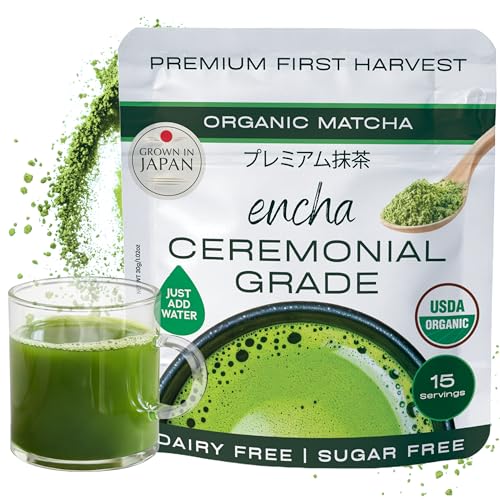
Encha Ceremonial Grade Organic Matcha (30g)
Encha
First-harvest organic matcha from Uji farms, sweeter and silkier whisked plain, currently cheaper than most rivals.
Bottom line: Encha's ceremonial is the connoisseur pick of the affordable tier: notably sweet and silky for the price, and at $19.99 verified live it currently undercuts Jade Leaf's Teahouse pouch.
Origin and grade. USDA Organic certified; first-harvest matcha from Uji, Japan, per the brand.
Encha sources first-harvest leaf from organic farms in Uji and stone-mills it into a powder with the sweet, umami-forward profile that cheap matcha never manages. Whisked plain it is silkier than most powders at twice the price.
At $19.99 for 30 grams, verified in stock July 22, 2026, it is about $1.33 per bowl, an unusually good price for first-harvest Uji leaf.
Who should buy it.
Drinkers who take their matcha plain and want the sweetest, silkiest cup in the affordable ceremonial tier.
What we don't like.
Popular enough that stock fluctuates, and the 30g tin goes quickly at a bowl a day.
- Grade
- Ceremonial (first harvest)
- Origin
- Uji, Japan
- Certification
- USDA Organic
- Caffeine (2 g)
- 38 to 88 mg, typically 60 to 70
- Size
- 30g (~15 servings)
What we like.
- Sweet, silky first-harvest character
- USDA organic
- Excellent live price per bowl
Worth noting.
- Stock comes and goes
- Small tin

Jade Leaf Matcha Culinary Grade (100g)
Jade Leaf
The workhorse powder: 100 grams of organic Japanese matcha for lattes, smoothies, and baking at about 45 cents a serving.
Bottom line: If your matcha meets milk or a blender, buy culinary grade and save the ceremonial for plain bowls. This is the best-value way to fuel a latte habit, and the caffeine is the same story.
Origin and grade. USDA Organic certified; Japanese-grown culinary grade matcha.
Culinary grade uses later-harvest leaf, bolder and more astringent, which is exactly what you want once milk, sweetener, or a smoothie enters the picture: the matcha flavor punches through instead of vanishing.
At $22.39 for 100 grams, about 45 cents per 2 g serving, it costs a third of ceremonial per cup. Do not whisk it plain and judge the category by it; that is not its job.
Who should buy it.
Latte drinkers, smoothie makers, and bakers who go through matcha by the spoonful.
What we don't like.
Too astringent to enjoy whisked plain; for that, use either ceremonial pick above.
- Grade
- Culinary
- Origin
- Japan
- Certification
- USDA Organic
- Caffeine (3 g scoop)
- 57 to 133 mg
- Size
- 100g (~50 servings)
What we like.
- About 45 cents a serving
- Flavor survives milk and blending
- USDA organic at scale
Worth noting.
- Astringent whisked plain
- Not a ceremonial substitute
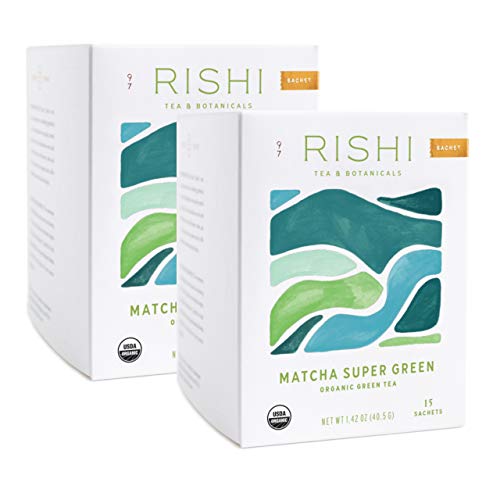
Rishi Tea Matcha Super Green Sachets, 30 Count (2 x 15)
Rishi Tea
Organic green tea and matcha in a sachet: most of matcha's character with zero whisking, at a green-tea caffeine level.
Bottom line: The no-equipment route. Because the leaf steeps out rather than being consumed, a sachet lands closer to strong green tea than to a whisked bowl, useful to know if you are counting milligrams.
Origin and grade. USDA Organic certified; Japanese green tea blended with matcha in pyramid-style sachets.
Rishi's Matcha Super Green blends organic sencha-style leaf with matcha powder in a sachet, so you get matcha's color and body without a whisk or a scale. It brews a vivid, savory cup in three minutes.
That makes it the pick for afternoon drinkers who want the flavor with a gentler dose. At $20.00 for 30 sachets it is about 67 cents a cup.
Who should buy it.
Desk and travel drinkers who want matcha character without equipment, or a lower-caffeine matcha option.
What we don't like.
It is not a whisked bowl and should not be compared to one; per-cup cost is high for steeped tea.
- Format
- Pyramid-style sachets
- Origin
- Japan
- Certification
- USDA Organic
- Caffeine (steeped)
- ~25 to 45 mg per cup
- Count
- 30 sachets
What we like.
- No whisk, no scale, no cleanup
- USDA organic
- Gentler caffeine dose
Worth noting.
- Less caffeine and body than whisked matcha
- 67 cents a cup

Ito En Matcha Green Tea, Traditional, Tea Bags (20 Count)
Ito En
Japan's biggest green tea brand's sencha-plus-matcha bag: a richer everyday green cup for about 41 cents.
Bottom line: The cheapest honest way to get matcha into a daily routine. It is a green tea bag enriched with matcha, not a bowl of matcha, and at this price that is a fine deal.
Origin and grade. Japanese sencha blended with finely ground matcha; no added sugar or flavorings.
From Japan's No. 1 green tea maker, these bags blend sencha with finely ground matcha, brewing a deeper green, rounder cup than plain bagged sencha. It needs no gear and forgives casual brewing.
At $8.15 for 20 bags it is the lowest cost of entry on this page. Our full Ito En review covers the rest of the lineup.
Who should buy it.
Budget-minded drinkers upgrading from plain green tea bags.
What we don't like.
Modest richness compared to real whisked matcha; it is an enriched green tea, not a substitute.
- Format
- Tea bags
- Type
- Sencha + matcha blend
- Origin
- Japan
- Caffeine (steeped)
- ~25 to 45 mg per cup
- Count
- 20 bags
What we like.
- About 41 cents a cup
- No equipment needed
- Clean ingredients
Worth noting.
- Not a whisked-matcha experience
- Mild by matcha standards
Matcha caffeine by weight and by teaspoon
One conversion unlocks every row: 1 level teaspoon of matcha weighs about 2 grams, and published analyses put matcha at 19 to 44 mg of caffeine per gram. Multiply through and you get the chart. "Typical" uses the 30 to 35 mg per gram mid-range that most quality ceremonial powders cluster around.
| Amount of matcha | Weight | Caffeine range | Typical |
|---|---|---|---|
| 1/4 tsp | ~0.5 g | 9 to 22 mg | ~15 mg |
| 1/2 tsp | ~1 g | 19 to 44 mg | ~30 mg |
| 1 tsp (standard serving) | ~2 g | 38 to 88 mg | 60 to 70 mg |
| 1.5 tsp | ~3 g | 57 to 133 mg | ~90 to 105 mg |
| 2 tsp (koicha / strong latte) | ~4 g | 76 to 177 mg | ~120 to 140 mg |
| 1 tablespoon | ~6 g | 113 to 266 mg | ~180 to 210 mg |
Two honest caveats. First, the range is wide because matcha itself varies: shade-growing, harvest timing, and leaf age all move caffeine content, which is why lab analyses of commercial powders span 19 to 44 mg per gram. Second, nobody levels their scoop. A "teaspoon" in a hurry is often 2.5 to 3 grams, so if you are caffeine-sensitive, weigh once and see what your scoop actually holds.
Caffeine in matcha drinks, from usucha to a 16 oz latte
Drinks are just the weight table with water and milk added, the liquid volume does not change the caffeine, only the powder does. That is the key to the "16 oz matcha" question: a 16 oz latte has no more caffeine than the scoop that went into it.
| Drink | Matcha used | Caffeine |
|---|---|---|
| Usucha (traditional thin matcha) | ~2 g | 38 to 88 mg, typically 60 to 70 |
| Koicha (thick ceremonial matcha) | ~4 g | 76 to 177 mg, typically 120 to 140 |
| Homemade 12 oz latte | 2 to 3 g | roughly 60 to 105 mg |
| Homemade 16 oz latte | 3 to 4 g | roughly 90 to 140 mg |
| Starbucks grande (16 oz) Matcha Tea Latte | per Starbucks | 80 mg (published figure) |
| Matcha-blend tea bag (steeped) | sencha + matcha | ~25 to 45 mg, closer to regular green tea |
Cafe drinks vary because shops scoop differently, most use 2 to 4 grams in a 16 oz cup. Starbucks is the useful fixed point since it publishes menu caffeine: 80 mg for the 16 oz grande, 55 mg for a 12 oz tall, and 110 mg for a 20 oz venti. A strong homemade 16 oz latte made with a full 4 gram scoop of quality powder can more than match a grande.
Matcha vs coffee, espresso, and other teas
Context for the numbers, using USDA FoodData Central values for the comparison drinks:
| Drink (8 oz unless noted) | Caffeine |
|---|---|
| Brewed drip coffee | ~95 mg |
| Matcha, 2 tsp / 4 g | 76 to 177 mg |
| Matcha, 1 tsp / 2 g | 38 to 88 mg (typically 60 to 70) |
| Espresso, single 1 oz shot | ~64 mg |
| Black tea, steeped | ~47 mg |
| Green tea, steeped | ~28 mg |
The practical read: a standard bowl of matcha sits between steeped black tea and drip coffee, a two-teaspoon latte can reach or pass coffee, and steeped green tea is far below all of it. Matcha drinkers also consistently describe a smoother lift than coffee, which research attributes to matcha's unusually high L-theanine content taken together with its caffeine; the full science is in our matcha caffeine explainer and matcha vs coffee.
On daily limits: the FDA's published guidance is that up to 400 mg of caffeine a day is not generally associated with negative effects for healthy adults. Two standard bowls of matcha sit comfortably inside that; a tablespoon-scooped latte habit gets there faster than people expect. Pregnant or caffeine-sensitive readers should consult a doctor about lower limits.
Methodology and sources
- Per-gram range: 18.9 to 44.4 mg caffeine per gram of matcha, from a 2021 peer-reviewed review of matcha chemistry (Kochman et al.) analyzing commercial powders; we round to 19 to 44 throughout.
- Typical values: the 30 to 35 mg per gram mid-range where most quality ceremonial powders cluster, consistent with the 60 to 70 mg per 2 g serving figure most manufacturers publish.
- Weight conversions: 1 level teaspoon of matcha is approximately 2 grams; 1 tablespoon is approximately 6 grams. Heaping scoops weigh meaningfully more.
- Comparison drinks: USDA FoodData Central values for brewed coffee, espresso, black tea, and green tea.
- Cafe figures: Starbucks' own published menu caffeine values for its Matcha Tea Latte sizes.
- Daily guidance: the FDA's published 400 mg per day figure for healthy adults.
- What we did not do: lab-test powders ourselves, or state a single false-precision number where the honest answer is a range.
Questions, answered.
How much caffeine is in matcha?
About 60 to 70 mg in a standard 1 teaspoon (2 gram) serving. Lab analyses of commercial powders report about 19 to 44 mg per gram, so the full range for a teaspoon is roughly 38 to 88 mg. A 3 gram latte scoop typically lands around 90 to 105 mg, and a tablespoon (about 6 grams) far more.
How much caffeine is in 1 tsp of matcha?
A level teaspoon of matcha weighs about 2 grams and contains roughly 38 to 88 mg of caffeine, based on the published range of 19 to 44 mg per gram. Most quality powders land in the middle, so the practical answer is about 60 to 70 mg per teaspoon, roughly two-thirds of an 8 oz cup of drip coffee. Heaping teaspoons weigh closer to 3 grams and climb toward 100 mg.
How much caffeine is in 3 grams of matcha?
Roughly 57 to 133 mg, using the published 19 to 44 mg per gram range, with typical powders delivering around 90 to 105 mg. Three grams is a common scoop for a homemade latte, which is why a strong matcha latte can match or exceed the roughly 95 mg in a cup of drip coffee.
How much caffeine is in 1 tablespoon of matcha?
A tablespoon holds about 6 grams of matcha, which works out to roughly 113 to 266 mg of caffeine, typically 180 to 210 mg. That is one large drink approaching half the FDA's published 400 mg daily guidance for healthy adults, so tablespoon-scooped recipes deserve a caffeine-sensitive reader's attention.
How much caffeine is in a 16 oz matcha latte?
It depends entirely on the powder, not the cup size: cafes typically use 2 to 4 grams in a 16 oz latte, which is roughly 60 to 140 mg of caffeine. Starbucks publishes 80 mg for its 16 oz grande Matcha Tea Latte. A homemade 16 oz latte with a full 4 gram scoop of quality matcha runs about 120 to 140 mg.
Does matcha have more caffeine than coffee?
Per serving, usually not: a standard 2 gram bowl of matcha carries 60 to 70 mg versus about 95 mg in an 8 oz drip coffee, per USDA figures. Per gram, matcha is stronger, and a two-teaspoon (4 gram) serving at 76 to 177 mg can match or beat coffee. Matcha's lift also tends to feel smoother thanks to its high L-theanine content.
How much caffeine is in matcha per gram?
Published laboratory analyses of commercial matcha powders report 18.9 to 44.4 mg of caffeine per gram, with most quality ceremonial powders clustering around 30 to 35 mg per gram. The spread reflects real differences in harvest timing, shading, and leaf age, which is why honest answers about matcha caffeine are ranges, not single numbers.
Do matcha tea bags have as much caffeine as matcha powder?
No. Matcha-blend tea bags and sachets steep the leaf and matcha in water and you discard the bag, so they deliver roughly 25 to 45 mg per cup, similar to strong green tea. Whisked matcha powder is consumed entirely, which is how a 2 gram bowl reaches 60 to 70 mg. If you want less caffeine, the bag is the feature, not the bug.
Filed under Explainer
Part of Tea Reference & Data · Everything Matcha
More tea worth comparing
Whatever you decide, these are the tea bags our reviews keep ranking on top. Live price check on each.
- Check price

Best Overall.
Twinings English Breakfast - Check price

- Check price

Best Fast Brew.
PG Tips Original - Check price

- Check price

- Check price

Best Green.
Ito En Oi Ocha Green Tea
As an Amazon Associate we earn from qualifying purchases, at no cost to you.
Keep reading.
Matcha Caffeine vs Coffee: How It Feels and When to Drink It
The companion explainer: why matcha's caffeine feels calmer, and the L-theanine science.
Best Matcha
Our full matcha rankings, from ceremonial tins to latte workhorses.
Best Hot Water Boilers for Tea
Matcha whisks best at 175°F, and these machines hold that exact temperature all day.
Matcha vs Coffee
The head-to-head on energy, caffeine curve, and cost.
Best English Breakfast Tea
Prefer your caffeine malty and milky? The breakfast blends, ranked.
Tea Bag Price Index (July 2026)
Our other original dataset: live cost per cup for 162 verified teas.
Tea Caffeine Chart: Every Type, From Published Data
The whole-aisle sibling of this page: caffeine for black, green, white, oolong, and herbal.
Best Tea for Studying
These numbers put to work: matcha leads our caffeine-plus-L-theanine focus ranking.