Our pick. Ippodo
Check priceBest Hojicha in 2026: 6 Roasted Green Teas We Love
Our ranked picks for loose leaf, powder, and bags of nutty, low caffeine roasted green tea.
By The Best Tea Bags Desk9 min readUpdated
Quick answer: Best overall loose leaf is Ippodo Tea Hojicha (100g), a light and sweet roasted bancha from a Kyoto house established in 1717.
Our top pick.Best overall loose leaf
Ippodo Tea Hojicha 100g Light and Sweet Roasted Bancha Loose Leaf
- Price.
- $21.99
- Our rating.
- 4.8 out of 5
A light, sweet, gently roasted bancha from a Kyoto house that has been doing this since 1717.
Not sure yet? Compare all 6 picks below ↓
If you want one bag that gets hojicha right, buy Ippodo Tea Hojicha (100g). This Kyoto house has been roasting bancha since 1717, and the result is a light, sweet, campfire toasty cup that works morning, afternoon, or right before bed.
Hojicha is green tea that has been roasted over high heat, which is why the leaves turn reddish brown and the flavor turns nutty, caramel, and toasty instead of grassy. The roast also drives off much of the caffeine, so a cup is gentle enough for the evening and mild enough for kids. It brews an amber cup with almost no bitterness, which makes it one of the easiest Japanese teas to fall for.
We picked these by cross referencing roast style, leaf grade, origin disclosure, and format so there is a clear winner for loose leaf, powder, bags, organic, value, and premium. No brand pays for placement here, and prices move constantly, so always confirm the current price on the retailer page before you buy.
The short version.
- For lattes, Jade Leaf Organic Hojicha Barista Edition is a stone finished powder made to whisk into milk.
- Sugimoto Tea Hojicha Bags (20 count) are the easy value pick from a Shizuoka roaster founded in 1946.
- Roasting drops caffeine to roughly 5 to 10 mg per cup, so hojicha is a solid evening and kid friendly tea.
- Want organic loose leaf: YAMASAN Kyoto Uji Hojicha is JAS certified organic in a 150g bag.
| Product | Format | Origin | Best for |
|---|---|---|---|
| Ippodo Tea Hojicha 100g | Loose leaf | Kyoto, Japan | Best overall loose leaf |
| Jade Leaf Organic Hojicha Barista Edition | Powder | Uji and Kagoshima, Japan | Best powder for lattes |
| Yamamotoyama Hojicha Tea Bags | Tea bags | Japan | Best bagged |
| YAMASAN Kyoto Uji Hojicha 150g | Loose leaf | Uji, Kyoto, Japan | Best organic |
| Sugimoto Tea Hojicha Bags 20ct | Tea bags | Shizuoka, Japan | Best value |
| Sugimoto Organic Hojicha Latte Blend | Latte mix | Shizuoka, Japan | Best latte mix |
Six hojicha teas compared by format, origin, and best use.
Ippodo Tea Hojicha 100g Light and Sweet Roasted Bancha Loose Leaf
Ippodo
A light, sweet, gently roasted bancha from a Kyoto house that has been doing this since 1717.
Bottom line: This is our top hojicha pick. The roast is dialed in so the cup lands nutty and sweet rather than smoky or bitter, and the 100g bag gives you enough leaf to brew it daily.
Origin and grade. Ippodo publicly states its tea is grown, processed, blended, and packaged in Japan, and the company has been run by the same Kyoto family since 1717. This is a roasted bancha, not a premium single origin, and the brand describes it as an everyday sipping hojicha.
Ippodo roasts bancha leaves until they turn reddish brown, which is the whole trick behind hojicha. The brewed cup is amber, clean, and forgiving, with a toasty aroma that Ippodo itself compares to baking cookies. There is almost no astringency, so you can steep it hot without babysitting the timer.
Because the roast burns off much of the caffeine, this is a genuine evening tea. It is also easy on the stomach and mild enough for the whole family. Ippodo notes that quality loose leaf like this can be brewed up to three times, so keep later steeps short.
Who should buy it.
Anyone who wants the definitive, everyday loose leaf hojicha from a heritage Kyoto house.
What we don't like.
It is an everyday grade, so single origin obsessives may want a pricier reserve lot.
- Format
- Loose leaf
- Weight
- 100g
- Origin
- Kyoto, Japan
- Base tea
- Roasted bancha
- Roast
- Light and sweet
What we like.
- Nutty, sweet, dialed-in roast
- Heritage Kyoto house since 1717
- Low caffeine, good for evenings
Worth noting.
- Everyday grade, not single origin
- No reserve-lot option

Jade Leaf Matcha Organic Japanese Hojicha Roasted Powder Barista Edition 1.76 oz
Jade Leaf
A roasted green tea powder built to whisk into milk for a nutty, caramel hojicha latte.
Bottom line: If you want hojicha lattes at home, powder beats loose leaf because it dissolves right into the drink. Jade Leaf's Barista Edition is bold enough to cut through steamed milk without tasting flat.
Origin and grade. Jade Leaf states this is organic hojicha powder made from traditionally roasted first harvest Japanese tea leaves, sourced from partner farms in the Uji and Kagoshima regions. The Barista Edition is formulated to stand up to milk and sweetener.
Hojicha powder is just roasted green tea leaves ground fine, the same idea as matcha but toasty instead of grassy. That means you drink the whole leaf, and it blends into milk for a caramel colored latte. The Barista Edition leans a little stronger than the teahouse grade specifically so the roast survives dairy and syrup.
Caffeine stays low here because the leaves are roasted before grinding, so a hojicha latte is a fair evening swap for coffee. Use about a teaspoon, whisk or froth it into warm milk, and sweeten to taste.
Who should buy it.
Home baristas who want a nutty, low caffeine latte or a hojicha flavor for baking.
What we don't like.
Powder clumps if you dump it into cold milk, so whisk or sift it first.
- Format
- Powder
- Weight
- 1.76 oz
- Servings
- About 50
- Origin
- Uji and Kagoshima, Japan
- Certification
- Organic
What we like.
- Dissolves right into milk
- Bold enough to cut through dairy
- Organic first-harvest roasted leaves
Worth noting.
- Clumps in cold milk
- Needs whisking or sifting first

Yamamotoyama Hojicha Roasted Green Tea Bags, 16 Count (Pack of 6)
Yamamotoyama
Convenient hojicha sachets from a tea house with more than three centuries of history.
Bottom line: When you want hojicha without measuring loose leaf, these bags deliver the robust roasted flavor in a drop and steep sachet. It is the most grab and go option in this guide.
Origin and grade. The organic version of these bags is out of stock on Amazon, so we link Yamamotoyama's standard hojicha bags. The brand describes itself as a purveyor of green tea for over 330 years.
Each sachet holds gently roasted green tea leaves, so you get the same toasty, low bitterness cup as loose leaf with none of the fuss. Drop one in hot water, wait a couple of minutes, and you have an amber, nutty brew that is just as good iced.
These are a smart entry point if you are new to hojicha or want something for the office. Because the leaves are roasted, caffeine stays modest, which makes this a fine late day cup.
Who should buy it.
Bag drinkers who want hojicha with zero prep or cleanup.
What we don't like.
Bagged leaf is more broken than loose leaf, so the flavor is a touch less nuanced.
- Format
- Tea bags
- Count
- 16 bags x 6 boxes
- Origin
- Japan
- Certification
- Not organic (organic version out of stock)
- Extras
- Sugar free, zero calorie
What we like.
- Organic hojicha with zero prep
- Toasty, low-bitterness cup
- Good hot or iced
Worth noting.
- Broken bagged leaf, less nuance
- Not as full as loose leaf

YAMASAN Kyoto Uji Hojicha Roasted Green Tea JAS Certified Organic 150g
YAMASAN
A JAS certified organic loose leaf hojicha sourced from Uji, Kyoto.
Bottom line: For drinkers who care about certification, this is the organic loose leaf to buy. The Uji sourcing and JAS mark are documented, and the 150g bag is a generous amount for the money.
Origin and grade. YAMASAN states this hojicha is JONA and JAS certified organic and is selected from organic green tea grown in Uji, Kyoto, Japan. It is a low caffeine roasted green tea sold in a 150g bag.
Uji is one of the most storied tea regions in Japan, and YAMASAN roasts its organic green tea from the area into a clean, toasty hojicha. The cup is nutty and smooth with the low astringency that makes roasted green tea so easy to drink all day.
The roast keeps caffeine low, so this doubles as an evening tea. At 150g you get plenty of loose leaf, which makes it a practical daily organic option rather than a tiny specialty tin.
Who should buy it.
Shoppers who want certified organic loose leaf hojicha with clear Uji sourcing.
What we don't like.
Presentation is plain, so it is not the gift tin some rivals offer.
- Format
- Loose leaf
- Weight
- 150g
- Origin
- Uji, Kyoto, Japan
- Certification
- JAS and JONA organic
- Caffeine
- Low
What we like.
- JAS certified organic Uji leaf
- Nutty, smooth, low astringency
- Generous 150g bag
Worth noting.
- Plain packaging, not a gift tin
- Everyday rather than showpiece
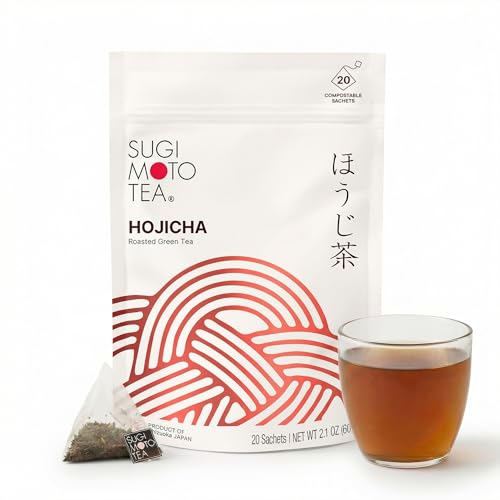
SUGIMOTO TEA Japanese Hojicha Roasted Green Tea Bags 20 Count
Sugimoto
Affordable, high roast hojicha bags from a Shizuoka tea company founded in 1946.
Bottom line: Sugimoto's high temperature roast gives these bags a deeper, toastier flavor than most supermarket hojicha, and the 20 count price makes them an easy everyday buy. This is our value pick.
Origin and grade. Sugimoto states its hojicha is crafted from early harvest kukicha and finished with a high temperature roast, and that products are packed by Sugimoto Seicha USA in nitrogen flushed, vacuum sealed packaging. The company was founded in Shizuoka in 1946.
Sugimoto builds this hojicha from kukicha, the stems and twigs of the tea plant, then pushes it through a hot roast that turns the leaf a rich brown. The result is a bold, caramel forward cup that still stays low in bitterness. It works hot or brewed cold over ice.
Because it is roasted, the caffeine is low, so this is a fine tea to sip in the evening or hand to the kids. The nitrogen flushed packaging is a nice touch for freshness at this price.
Who should buy it.
Anyone who wants a legitimately good hojicha bag without paying premium loose leaf prices.
What we don't like.
The bold roast is delicious but can taste a bit smoky if you oversteep it.
- Format
- Tea bags
- Count
- 20 bags
- Origin
- Shizuoka, Japan
- Base tea
- Kukicha
- Roast
- High temperature
What we like.
- Deep, toasty high-temperature roast
- Low price per bag
- Nitrogen-flushed for freshness
Worth noting.
- Can taste smoky if oversteeped
- Bold roast is not for everyone

SUGIMOTO TEA Japanese Organic Hojicha Latte Blend Mix Sweetened 4.23 oz
Sugimoto
A sweetened, ready to whisk organic hojicha latte mix for a fast cafe style drink.
Bottom line: If you want a hojicha latte with zero fuss, this pre sweetened blend gets you there in one scoop. It trades the control of pure powder for pure convenience.
Origin and grade. Sugimoto markets this as an organic hojicha latte blend that is already sweetened, made by the same Shizuoka roaster founded in 1946. It is a 4.23 oz (120g) powder blend intended to be mixed with milk or water.
Unlike a straight hojicha powder, this is a finished latte mix with sweetness already built in, so you just whisk it into warm milk and drink. The roasted green tea base keeps that nutty, toasty character, and the sweetening rounds it into a dessert leaning cup.
It is a low caffeine treat that stands in nicely for a coffee shop run, and kids tend to love the caramel note. If you prefer to control your own sugar, reach for the unsweetened powder instead.
Who should buy it.
People who want an instant, sweetened hojicha latte without measuring sweetener.
What we don't like.
It comes pre sweetened, so it is not for anyone who wants to keep it unsweetened.
- Format
- Latte mix
- Weight
- 4.23 oz (120g)
- Origin
- Shizuoka, Japan
- Certification
- Organic
- Sweetened
- Yes
What we like.
- Instant sweetened hojicha latte
- Nutty, toasty, dessert-leaning cup
- Low caffeine, one-scoop easy
Worth noting.
- Comes pre sweetened
- No control over the sugar
Questions, answered.
What is hojicha and how is it different from other green tea?
Hojicha is Japanese green tea, usually bancha or kukicha, that has been roasted over high heat. The roast turns the leaves reddish brown and swaps the grassy flavor of most green tea for a nutty, caramel, toasty character. It also brews an amber cup with very little bitterness.
Does hojicha have caffeine?
Only a little. The roasting process burns off much of the caffeine, so a cup typically lands around 5 to 10 mg, far below coffee. That is why hojicha is a popular evening tea and is gentle enough for kids.
Is hojicha good before bed?
Yes. Because roasting lowers the caffeine and the flavor is smooth and low in astringency, many people drink hojicha in the evening. If sleep is your main goal, see our guide to the best tea for sleep for caffeine free options too.
Should I buy hojicha loose leaf, bags, or powder?
Loose leaf like Ippodo gives the fullest flavor and can be steeped several times. Bags are the easiest for daily drinking. Powder, like Jade Leaf Barista Edition, is what you want for hojicha lattes because it whisks into milk.
How do I make a hojicha latte?
Whisk about a teaspoon of hojicha powder into a splash of hot water to break up clumps, then combine with steamed or warm milk and sweeten to taste. A pre sweetened mix like Sugimoto's latte blend skips the measuring.
Filed under Buyer's Guide
Part of Tea by Type
More tea worth comparing
Whatever you decide, these are the tea bags our reviews keep ranking on top. Live price check on each.
- Check price

Best Overall.
Twinings English Breakfast - Check price

- Check price

Best Fast Brew.
PG Tips Original - Check price

- Check price

- Check price

Best Green.
Ito En Oi Ocha Green Tea
As an Amazon Associate we earn from qualifying purchases, at no cost to you.