Our pick. Yorkshire Tea
Check priceBest Tea for Coffee Drinkers 2026: 7 Switch-Worthy Cups
The strong, malty, roasted, and smoky teas that satisfy a coffee palate, ranked by an honest standard: would a two-mug-a-morning coffee drinker actually keep drinking this?
By The Best Tea Bags Desk~12 min readUpdated
Quick answer: Best overall for coffee drinkers: Yorkshire Red, a thick, malty builder's brew that takes milk like coffee does, about 7 cents a cup at the July 22, 2026 price.
Our top pick.Best Tea for Coffee Drinkers Overall
Yorkshire Tea Red, Pillow Tea Bags, 240 Count
- Price.
- $16.20 (240 bags)
- Our rating.
- 4.7 out of 5
The builder's brew that treats milk the way coffee does: dark, thick, and strong enough to stand up in it.
Not sure yet? Compare all 7 picks below ↓
The best tea for coffee drinkers is a proper malty black tea, and our pick is Yorkshire Red: thick, dark, assertive, brilliant with milk, and about 7 cents a cup in the 240-count box. Most tea disappoints coffee people for a predictable reason: they are handed something pale and delicate when what a coffee palate wants is body, roast, and edge. Those teas exist. This guide is nothing but them.
What a coffee drinker misses, in order: body (the mouth-filling weight a light tea lacks), bitterness with purpose (structure, not accident), roast (the toasty, dark notes of the bean), and the milk ritual. Each pick below answers at least two: malty Assam-driven blacks for body and milk, roasted hojicha for the closest flavor cousin coffee has in the tea world, smoky lapsang souchong for the dark-roast crowd, and masala chai for latte people. On caffeine, honesty matters: USDA figures put brewed coffee near 95 mg per cup and black tea at roughly 40 to 70 mg, so tea is a step down, which many switchers count as the point. The full numbers are in our caffeine chart and tea vs coffee deep dive.
Prices shown were read through the Amazon Creators API on July 22, 2026 and change often. We are reader-supported and may earn a commission through our links; rankings are never for sale.
The short version.
- Closest flavor to coffee: hojicha, Japanese green tea roasted until toasty and dark; Yamamotoyama's 16-bag box is $6.20.
- Best single-origin upgrade: Taylors Pure Assam, the malty style that defines coffee-friendly black tea, $7.79 for 50 bags.
- For dark-roast loyalists: Harney & Sons Lapsang Souchong, pine-smoked black tea that out-bolds any bean.
- For latte people: masala chai (Vahdam loose leaf or Stash bags), brewed strong with hot milk.
- Caffeine honesty: black tea carries roughly half of coffee's dose (40 to 70 mg vs ~95 mg per 8 oz), so plan the switch, don't white-knuckle it.
| Pick | Answers coffee's | Character | Live price |
|---|---|---|---|
| Yorkshire Red, 240 ct | Body + milk ritual | Thick, malty, assertive | $16.20 |
| Taylors Pure Assam | Body + depth | Malty single origin | $7.79 |
| PG Tips, 240 ct | The daily mug habit | Brisk builder's brew | $17.75 |
| Vahdam English Breakfast Loose | Fresh-ground ritual | Farm-direct, brisk, malty | $21.99 |
| Yamamotoyama Hojicha | Roast character | Toasty, coffee-adjacent | $6.20 |
| Harney & Sons Lapsang | Dark-roast intensity | Pine-smoked, bold | $11.20 |
| Stash Chai Spice, 100 ct | The latte | Spiced, milk-built | $21.45 |
The best teas for coffee drinkers at a glance, Amazon prices as of July 22, 2026
Yorkshire Tea Red, Pillow Tea Bags, 240 Count
Yorkshire Tea
The builder's brew that treats milk the way coffee does: dark, thick, and strong enough to stand up in it.
Bottom line: This is the cup we recommend to coffee drinkers first, and the one buyers most often say they stick with. Yorkshire Red brews fast, dark, and malty with real tannic grip, takes milk and sugar exactly like coffee does, and the 240-bag box costs less than a week of coffee-shop drinks.
Origin and grade. Blended in Harrogate from Assam, Kenyan, and Rwandan leaf; Rainforest Alliance Certified sourcing per the brand.
Britain's "builder's brew" tradition is essentially tea engineered to coffee-drinker spec: strong, dark, milky, and constant. Yorkshire Red is the best widely available example, heavy on Assam and Kenyan leaf, brewing a cup with genuine body and a malty, almost-bready depth that reads closer to a flat white than to anything pale and floral.
At about 7 cents a cup it also demolishes coffee economics; our price index ranks it among the cheapest verified cups on Amazon. Full brand rundown in the Yorkshire Tea review, and the wider style in our English Breakfast ranking.
Who should buy it.
Milk-and-sugar coffee drinkers, two-mug-morning people, and anyone who wants the switch to cost nothing.
What we don't like.
Oversteeped without milk it turns harsh, and black-coffee purists may prefer the lapsang or Assam below.
- Type
- Black tea blend
- Caffeine (8 oz)
- ~40 to 70 mg
- Count
- 240 bags
- Per cup
- ~7 cents
- Serve
- Strong, with milk
What we like.
- Real body, takes milk like coffee
- About 7 cents a cup
- Fast, consistent, everywhere
Worth noting.
- Harsh if oversteeped plain
- Blend, not single origin

Taylors of Harrogate Pure Assam, 50 Count
Taylors of Harrogate
Malt is the bridge flavor between coffee and tea, and pure Assam is where malt lives.
Bottom line: Assam is the tea region coffee drinkers were built for: low-grown, full-bodied, and defined by exactly the malty depth that makes a breakfast blend feel substantial. Taylors' Pure Assam delivers it single-origin for $7.79, one of the best value upgrades in tea.
Origin and grade. 100% Assam black tea from India's Brahmaputra valley, blended by Taylors of Harrogate, est. 1886.
Ask what separates a coffee-satisfying tea from a thin one and the answer is usually Assam: the Indian valley whose leaf brings the malty, full-bodied backbone to nearly every serious breakfast blend. Drinking it pure is like switching from a house blend to a single origin, the maltiness moves from background to headline, with a dark, honeyed depth and enough tannin to matter.
It stands up to milk but deserves a first cup plain. More on the house in our Taylors review, and the style's siblings in best black tea.
Who should buy it.
Coffee drinkers ready to taste why "malty" is tea's highest coffee-adjacent compliment.
What we don't like.
Fifty bags disappear fast once it becomes the daily cup, and it wants an accurate 4 minute steep.
- Type
- Black tea, single origin
- Origin
- Assam, India
- Caffeine (8 oz)
- ~40 to 70 mg
- Count
- 50 bags
- Character
- Malty, full-bodied
What we like.
- Definitive malty depth
- Single-origin at $7.79
- Excellent with or without milk
Worth noting.
- Small box
- Less forgiving than a blend

PG Tips Black Tea, 240 Count
PG Tips
Britain's kettle-to-mug default: brisk, dependable, and built for the same all-day rhythm as office coffee.
Bottom line: PG Tips is what replacing a coffee habit, rather than a coffee, looks like: 240 bags of brisk, consistent black tea that brew in three minutes and never vary. Less malty than Yorkshire, more snap; some switchers prefer exactly that edge.
Origin and grade. The UK's classic everyday black blend, sold by the hundreds of millions of cups a year since 1930.
A two-mug coffee habit is a rhythm as much as a flavor, and PG Tips is engineered for rhythm: the UK's default kettle tea since 1930, brisk and bright where Yorkshire is thick and malty, with a light tannic snap that reads a little like coffee's acidity. It brews to full strength in about three minutes and tastes identical on cup two hundred as on cup one.
At $17.75 for 240 bags it runs about 7 cents a cup, the same startling economics as Yorkshire. The whole lineup is in our PG Tips review.
Who should buy it.
High-volume mug drinkers replacing an all-day office coffee rhythm rather than a single precious morning cup.
What we don't like.
Less body than Yorkshire or Assam; black-no-milk drinkers will find it plainer than the picks above.
- Type
- Black tea blend
- Caffeine (8 oz)
- ~40 to 70 mg
- Count
- 240 bags
- Per cup
- ~7 cents
- Character
- Brisk, consistent
What we like.
- Built for the all-day habit
- Three-minute reliable brew
- About 7 cents a cup
Worth noting.
- Lighter body than Yorkshire
- Plain without milk

Vahdam Original English Breakfast, Loose Leaf (340g)
Vahdam
For the coffee drinker who grinds fresh beans: loose leaf shipped direct from Indian gardens, measured and steeped like a pour-over.
Bottom line: If your coffee identity is the ritual, scale, kettle, bloom, then bagged tea will feel like instant. Vahdam's loose English Breakfast is the pour-over equivalent: fresh, farm-direct leaf you measure and time, brisk and malty enough to satisfy, at about 13 cents a cup.
Origin and grade. Farm-direct Indian black tea, shipped from origin within days of packing per the brand; Non GMO verified.
Serious coffee people do not just drink coffee, they make it, and the tea equivalent of the pour-over ritual is loose leaf. Vahdam ships Indian-grown leaf direct from origin, and fresher leaf typically shows in the cup: this English Breakfast is described as brisk and malty, and buyers describe it as more aromatic than bagged blends.
340 grams brews 170+ cups, which puts this premium option at roughly 13 cents each, still a rounding error next to cafe coffee. Full brand story in our Vahdam review.
Who should buy it.
Pour-over and French-press people who want tea to be a craft, not a compromise.
What we don't like.
Needs an infuser and a minute of care; rushed mornings will reach for the bags instead.
- Type
- Black tea, loose leaf
- Origin
- India, farm direct
- Caffeine (8 oz)
- ~40 to 70 mg
- Size
- 340g (170+ cups)
- Per cup
- ~13 cents
What we like.
- Origin-fresh, aromatic leaf
- A real morning ritual
- 170+ cups per bag
Worth noting.
- Requires an infuser
- More steps than a tea bag

Yamamotoyama Hoji Cha (Roasted Green Tea), 16 Bags
Yamamotoyama
Green tea roasted until it tastes toasted, nutty, and faintly of cocoa: the nearest thing tea has to a cup of coffee.
Bottom line: Roasting is coffee's signature move, and hojicha is tea's version of it: bancha leaves roasted until the grassiness becomes toast, nuts, and a whisper of cocoa. It is the tea most likely to make a coffee drinker say "oh, this I get," and this box costs $6.20.
Origin and grade. Japanese green tea roasted hojicha-style by Yamamotoyama, a Tokyo tea house founded in 1690.
Most tea is dried; hojicha is roasted, and roasting is precisely the process that gives coffee its flavor family. The result pours reddish-brown and tastes toasty, nutty, gently sweet, with a low-slung warmth that sits closer to a mild roast coffee than to any other tea on this list. There is no milk tradition here; it satisfies black, the way a good drip cup does.
Brew with fully boiling water for 30 to 60 seconds, no technique required. Yamamotoyama has been at this since 1690; the wider style, latte blends included, is in our hojicha guide.
Who should buy it.
Black-coffee drinkers, roast-flavor loyalists, and anyone missing an evening cup that will not keep them up.
What we don't like.
Its caffeine is modest, so it is the flavor bridge, not the morning workhorse; pair it with a black tea above.
- Type
- Roasted green tea (hojicha)
- Caffeine
- Low; reduced by roasting
- Count
- 16 bags
- Brew
- Boiling, 30 to 60 sec
- Heritage
- Tokyo, est. 1690
What we like.
- Genuinely coffee-adjacent flavor
- $6.20 to find out
- Perfect evening cup
Worth noting.
- Too gentle for mornings
- Small box

Harney & Sons Lapsang Souchong, Loose Leaf Tin (3 oz)
Harney & Sons
Pine-smoked black tea for the French-roast-and-campfire palate: the boldest cup in the tea aisle.
Bottom line: If your coffee order is the darkest roast on the board, skip the gentle stuff: lapsang souchong is black tea smoked over pine, and it delivers more sheer flavor intensity than most teas can offer a coffee drinker. Harney's tin is the classic accessible version.
Origin and grade. Chinese black tea smoked over pinewood, from Harney & Sons, the Connecticut blender founded in 1983.
Some coffee drinkers do not want a bridge, they want intensity, and lapsang souchong is tea's maximum setting: Chinese black leaf dried over smoldering pinewood, brewing a cup that tastes of campfire, resin, and dark caramel. Espresso-and-French-roast people tend to split instantly into lifelong devotees and hard passes, and both camps decide by the second sip.
Harney's 3 oz tin brews around 35 cups, about 32 cents each. The house's gentler smoky-adjacent classics, Hot Cinnamon Spice above all, are in our Harney & Sons review, and the style's field in best lapsang souchong.
Who should buy it.
Dark-roast drinkers, peated-scotch people, and anyone bored by polite tea.
What we don't like.
The most polarizing flavor in tea; buy the small tin first, and brew it away from smoke-averse housemates.
- Type
- Smoked black tea, loose
- Origin
- Fujian, China
- Caffeine (8 oz)
- ~40 to 70 mg
- Size
- 3 oz tin (~35 cups)
- Character
- Pine smoke, dark caramel
What we like.
- Maximum flavor intensity
- Out-bolds any dark roast
- Resteeps well
Worth noting.
- Aggressively polarizing
- Needs an infuser
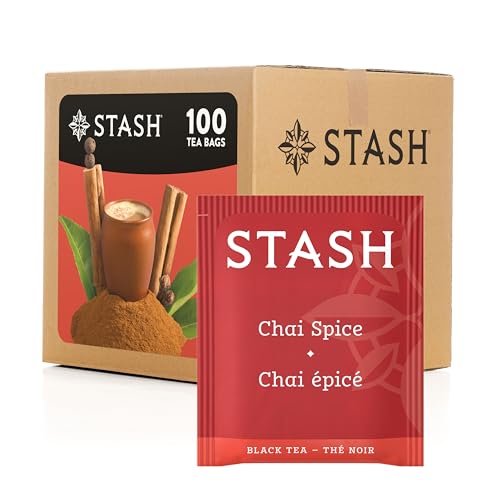
Stash Tea Chai Spice Black Tea, 100 Count
Stash
Two bags, hot milk, honey: the homemade chai latte that retires a $6 cafe habit without losing the ceremony.
Bottom line: For drinkers whose coffee is really a milk drink, the road out is chai. Stash's Chai Spice brews a properly spiced black base that stands up to steamed milk, and 100 bags at $21.45 makes the daily homemade latte a 43-cent habit.
Origin and grade. Black tea blended with cinnamon, ginger, cardamom, and clove by Stash, the Portland tea company founded in 1972.
Be honest about what a vanilla-latte order is: warm milk, sweetness, and a flavor engine. Masala chai is that drink with a black-tea engine, cinnamon, ginger, cardamom, and clove over Assam-style leaf, and it is the single easiest cafe-habit replacement in tea. Brew two bags strong in half a cup of water, top with hot milk, sweeten with honey, and the result embarrasses most coffee-shop chai, which is usually pumped syrup.
Spice-forward, milk-built, and ritual-rich, it answers the latte question better than any plain tea can. See also chai vs coffee for the caffeine and cost math.
Who should buy it.
Latte, cappuccino, and flavored-coffee drinkers who want the milk ritual with tea underneath.
What we don't like.
Brewed weak in plain water it underwhelms; this pick only shines made strong and milky.
- Type
- Spiced black tea (chai)
- Spices
- Cinnamon, ginger, cardamom, clove
- Caffeine (8 oz)
- ~40 to 70 mg base
- Count
- 100 bags
- Serve
- Strong, with hot milk
What we like.
- True latte replacement
- About 43 cents per homemade latte
- 100-bag habit supply
Worth noting.
- Needs milk to shine
- Bags can't match stovetop loose chai
Questions, answered.
What is the best tea for coffee drinkers?
A strong, malty black tea brewed assertively; Yorkshire Red is our pick, thick and dark enough to take milk the way coffee does, at about 7 cents a cup. For black-coffee drinkers, roasted hojicha and pine-smoked lapsang souchong are the closest flavor relatives, and latte drinkers should go straight to masala chai with hot milk.
Which tea tastes most like coffee?
Hojicha, a Japanese green tea roasted until it develops toasty, nutty, lightly cocoa notes, comes closest, because roasting is the same process that builds coffee's flavor. For dark-roast intensity specifically, lapsang souchong, a black tea smoked over pinewood, actually exceeds coffee's boldness.
Does tea have as much caffeine as coffee?
No. Per USDA figures, brewed coffee carries about 95 mg per 8 oz cup, while black tea runs roughly 40 to 70 mg, green tea 15 to 45 mg, and herbal teas zero. Matcha is tea's high end at roughly 38 to 88 mg per bowl. Brewing black tea longer and stronger narrows the gap; many switchers count the lower dose as the benefit.
How do I switch from coffee to tea without headaches?
Taper instead of quitting cold: swap the day's second coffee for a strongly brewed black tea for a week, then the first. Brew two bags or steep 5 minutes when you feel the gap, since longer steeping extracts more caffeine. A cup of matcha, at up to 88 mg, is the strongest single tea bridge if the drop feels steep.
What tea should a latte drinker try?
Masala chai, brewed double strength and topped with hot milk and honey, is the closest homemade equivalent to a cafe latte, and a London Fog (Earl Grey with steamed milk and vanilla) is the elegant second option. Both keep the warm-milk ritual that is most of what a latte order is.
Is tea cheaper than coffee?
Dramatically, at the daily-habit level. The big 240-count black tea boxes on this page work out to about 7 cents a cup, and even premium loose leaf runs 13 to 32 cents, versus several dollars for a cafe drink. A $16 box of Yorkshire Red replaces roughly two months of daily coffee-shop orders.
Filed under Buyer's Guide
Part of Tea Buying Guides
More tea worth comparing
Whatever you decide, these are the tea bags our reviews keep ranking on top. Live price check on each.
- Check price

Best Overall.
Twinings English Breakfast - Check price

- Check price

Best Fast Brew.
PG Tips Original - Check price

- Check price

- Check price

Best Green.
Ito En Oi Ocha Green Tea
As an Amazon Associate we earn from qualifying purchases, at no cost to you.
Keep reading.
Best English Breakfast Tea
The flagship ranking of the strong morning blends this page starts from.
Tea vs Coffee
The full comparison: caffeine, cost, ritual, and taste.
Chai vs Coffee
The latte drinker's head-to-head, with the milk math.
Matcha vs Coffee
Tea's strongest caffeine format against the bean.
Best Black Tea
The broader black tea field beyond the breakfast blends.
Tea Caffeine Chart: Every Type, From Published Data
Coffee's 95 mg versus every tea type, from published ranges.
Tea Bag Price Index (July 2026)
Live cost per cup for 162 teas: the economics of the switch, measured.