What is matcha?
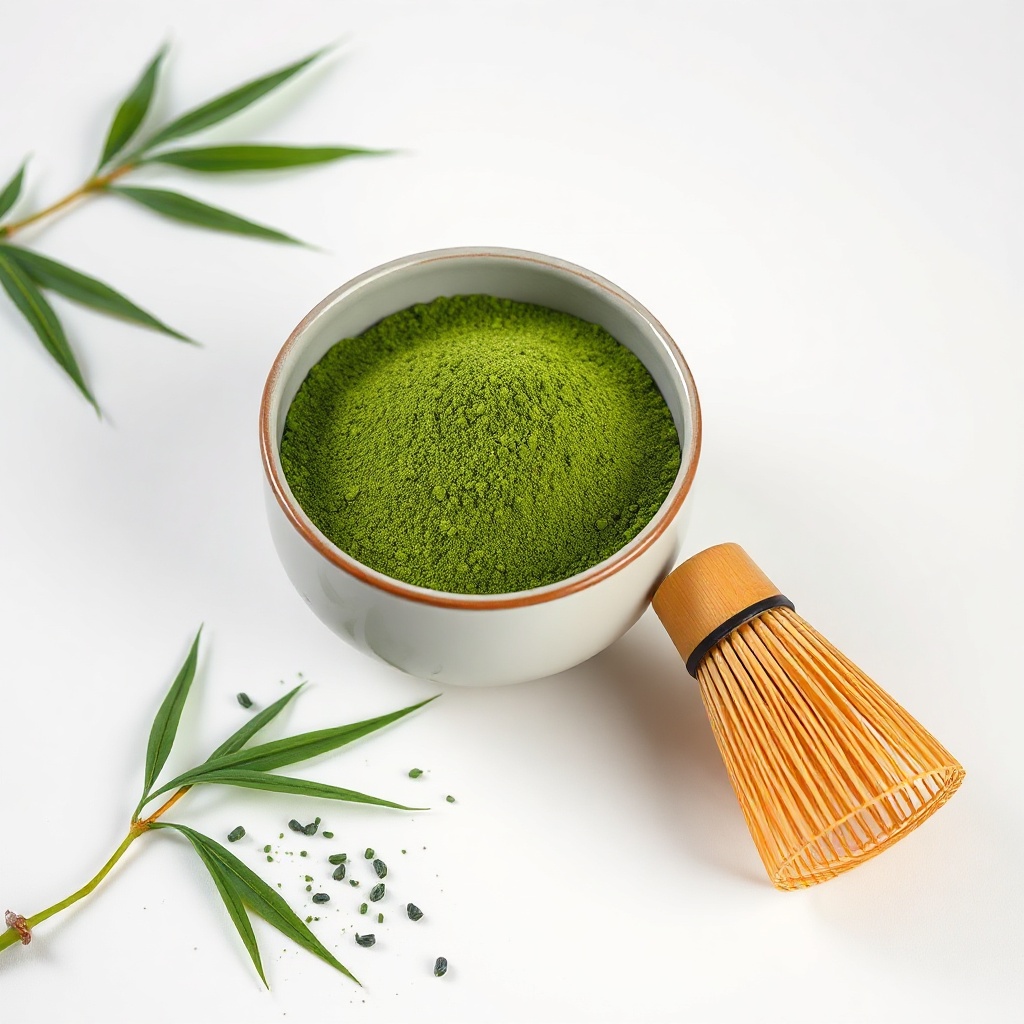
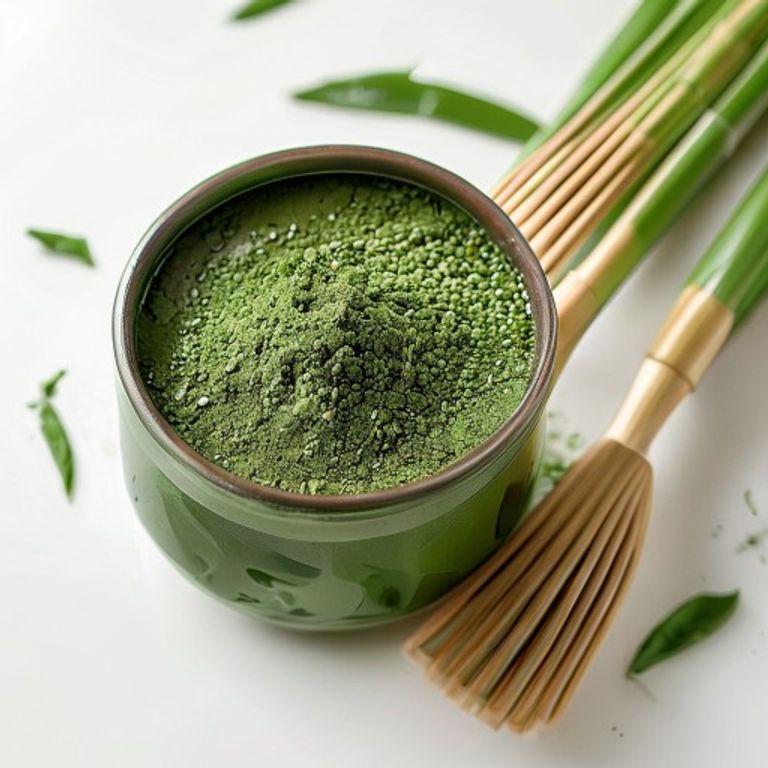
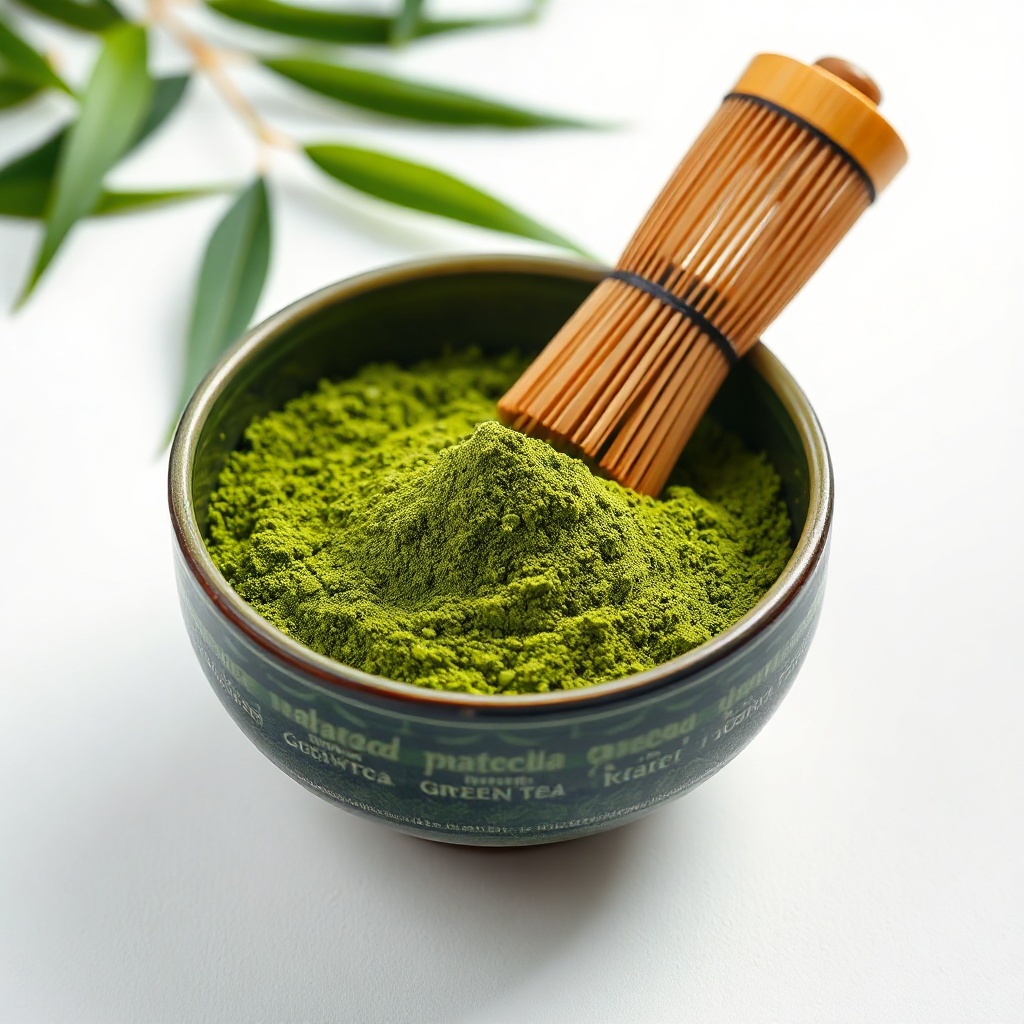
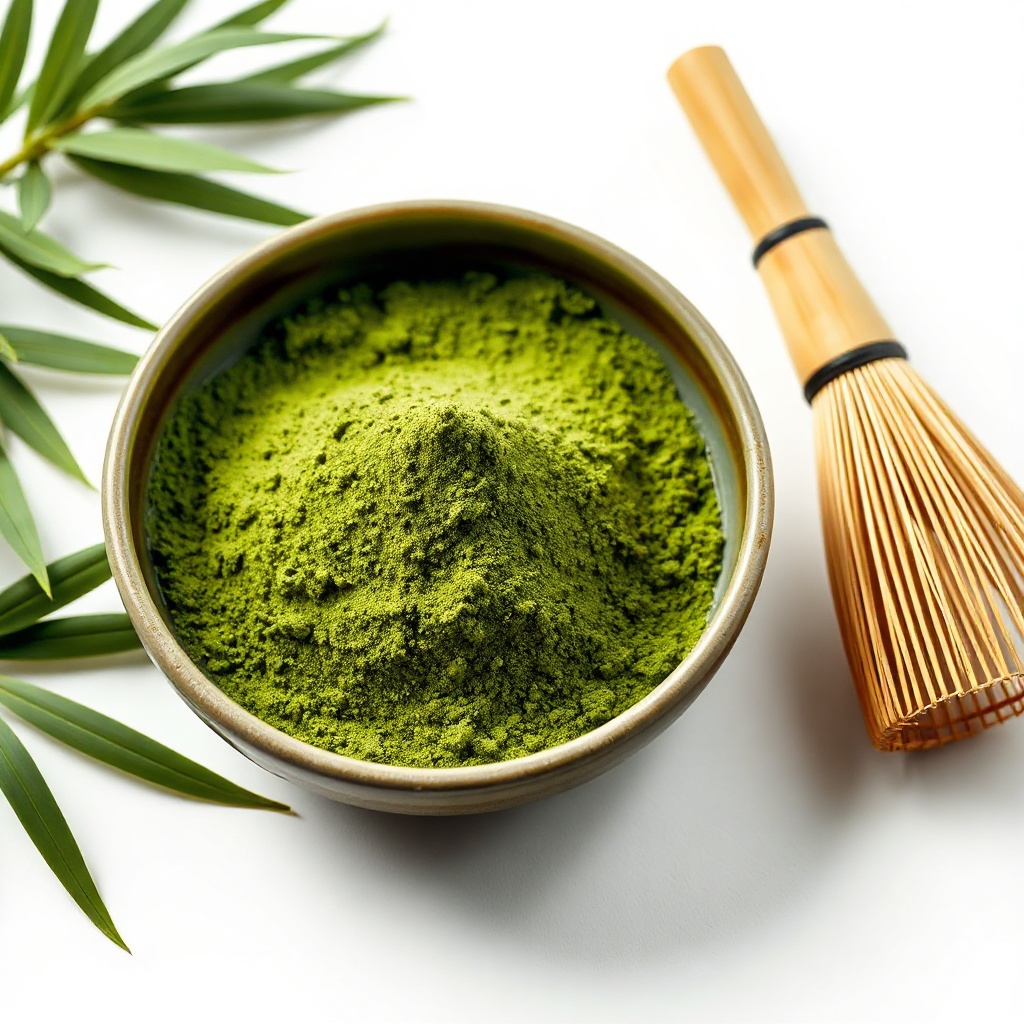
Matcha is shade-grown Japanese green tea, stone-ground into a fine bright-green powder. Unlike steeped tea, you whisk matcha directly into hot water and drink the entire leaf. This delivers dramatically higher concentrations of caffeine, L-theanine, EGCG, and chlorophyll than any other tea.
The key process is shade-growing: for 3-4 weeks before harvest, tea bushes are covered with bamboo or fabric to block 90%+ of sunlight. The plant compensates by producing more chlorophyll (vibrant green color) and more L-theanine (umami flavor + the "alert calm" effect), while reducing astringent catechins. After harvest, leaves are steamed, dried, deveined (the stems removed), and stone-ground at very low speed for 1+ hour to avoid heat damage to the chlorophyll.
The two main matcha-growing regions: Uji (Kyoto) is the historic center, producing the highest-grade ceremonial matcha. Nishio (Aichi) is the largest producer by volume. Kagoshima is the up-and-coming organic-friendly region in southern Japan.
Ceremonial vs. latte vs. culinary grade
Three grades, three use cases. Ceremonial: first-harvest, vibrant emerald, smooth umami sweetness. Whisked with water alone, no milk. $25-60 per 30g. Drink straight, savor.
Latte/Premium: second harvest, robust enough to cut through milk and sweetener. Slightly less vibrant green. $20-30 per 30g. Best for daily matcha lattes.
Culinary: third harvest, less vibrant, holds up to baking heat. $10-20 per 100g. For matcha brownies, ice cream, smoothies — anywhere you need bulk matcha and the subtle quality differences are masked.
Most matcha buyers waste money by buying ceremonial for lattes (the milk masks the quality you paid for) or by buying culinary for whisking (it tastes flat and slightly bitter when not in a recipe). Match grade to use case.
How to whisk matcha
Sift 1.5-2g matcha (one chashaku scoop) into a chawan (matcha bowl). Add 2oz of 175°F water. Whisk briskly with a chasen bamboo whisk in an "M" or "W" pattern for 15-20 seconds. The result should have a thick foamy crema on top.
For matcha latte: whisk 2g matcha with 2oz 175°F water, then pour into 6oz steamed milk. Sweeten with 1 tsp honey or maple syrup if desired.
No bamboo whisk? A small electric milk frother works — slightly less aerated but still drinkable. Avoid kitchen blenders or shakers; they over-aerate and produce foam without depth.
Pre-sift the matcha to break up clumps. Use water that's warm but not boiling. Whisk fast (briskly!) for the right texture.
Caffeine, L-theanine, antioxidants
A 2g serving of ceremonial matcha contains about 60-80mg caffeine — comparable to a cup of coffee. The caffeine is paired with 30-40mg L-theanine, which smooths the caffeine peak and produces the "alert calm" focus state described in clinical literature. Effect lasts 4-6 hours.
EGCG content: matcha is the most EGCG-rich tea by weight (about 130mg per 1g matcha vs. 30mg per cup of brewed green tea). This is why matcha is studied for cardiovascular and metabolic effects more than any other tea.
L-theanine is the differentiator. Combined with caffeine in a 1:2 to 2:3 ratio (which ceremonial matcha naturally provides), it produces calmer focus than coffee at equivalent caffeine doses. Many tech workers and creative professionals use matcha as their primary morning drink for this reason.
Top matcha brands
For ceremonial: Ippodo Ummon-no-mukashi (~$56 per 40g) is the top of the market — Kyoto-based since 1717. Matcha Konomi Akira (~$28.99 per 30g) is the value-tier ceremonial pick. Encha Ceremonial (~$32.99 per 30g) is organic Uji-direct.
For latte: Jade Leaf Organic Ceremonial (~$24.99 per 30g) is the most-popular Amazon-bestselling matcha, balanced for milk lattes. Encha Latte-Grade (~$28.99 per 60g) is engineered specifically for milk drinks. KenkoTea Premium (~$24.50 per 50g) is the Australian-Japanese hybrid value pick.
For culinary: Jade Leaf Matcha Classic Culinary Grade (~$19.99 per 100g) is the workhorse for baking and smoothies. Naoki Everyday (~$19.99 per 100g) is the clean alternative.
For toxin-screened: Pique Sun Goddess Matcha Sticks (~$64 per 30 sticks) is the most-clean-tested matcha — every batch screened for heavy metals, mold, pesticides, radiation. Single-serve format too.