Our pick. Vahdam
Check priceThe 7 Best Darjeeling Teas of 2026, Steeped and Ranked
The champagne of teas, researched and ranked: single-estate loose leaf, first flush specials, and the bagged versions that still taste like Darjeeling.
By The Best Tea Bags Desk10 min readUpdated
Quick answer: Best overall: Vahdam Darjeeling loose leaf, real muscatel character at about 12 cents a cup from the 12 oz bag.
Our top pick.Best Darjeeling Overall
Vahdam Darjeeling Tea Loose Leaf, 12 oz
- Price.
- around $20 (12 oz, 170+ cups)
- Our rating.
- 4.7 out of 5
Garden-fresh Himalayan Darjeeling with real muscatel character, shipped direct from India at about 12 cents a cup.
Not sure yet? Compare all 7 picks below ↓
The best Darjeeling tea for most people is Vahdam's Darjeeling loose leaf: a genuine, garden-fresh Himalayan Darjeeling with the style's signature muscatel character, shipped direct from India, and priced around $20 for a 12-ounce bag that brews 170-plus cups, roughly 12 cents each. For a tea that gets called the champagne of teas, that is a startling number.
Darjeeling comes from a small, legally protected region in the Indian Himalayas, and real Darjeeling tastes like nowhere else: lighter-bodied than Assam, aromatic, with the grape-like 'muscatel' note that made the style famous. The catch is that the name gets abused. Far more tea is sold as Darjeeling than the region grows, so buying from sources that name their sourcing matters more here than in any other category we cover.
We researched the Darjeelings actually verifiable on Amazon, from first flush specials to supermarket bags, and ranked them on aroma, muscatel character, freshness, transparency, and cost per cup. Prices are approximate and move often; confirm on the listing. We are reader-supported and may earn a commission through our links; placement is never for sale.
The short version.
- Best premium: Vahdam First Flush Darjeeling 12 oz, the spring-picked special at around $40; the big-ticket buy for people who want the style at its aromatic peak.
- Best sachets: Harney & Sons Darjeeling, 50 proper sachets around $20 with the blending house's reliable quality.
- Cheapest real taste of the style: Ahmad Darjeeling bags, around $7 for a 20-count box.
- First flush (spring) Darjeeling is lighter, greener, and more floral; second flush (summer) brings the deeper muscatel. Neither is 'better', they are different teas.
| Tea | Best for | Format | Approx. cost per cup |
|---|---|---|---|
| Vahdam Darjeeling Loose Leaf, 12 oz | Best overall | Loose leaf | About 12 cents |
| Vahdam First Flush Darjeeling, 12 oz | Best premium | Loose leaf | About 24 cents |
| Vahdam First Flush Darjeeling, 3.53 oz | First flush starter | Loose leaf | About 30 cents |
| Harney & Sons Darjeeling, 50 sachets | Best sachets | Pyramid sachets | About 40 cents |
| Vahdam Darjeeling Tea Bags, 100 ct | Best bagged value | Pyramid bags | About 20 cents |
| Harney & Sons Classic Darjeeling Tin, 20 ct | Best gift-ready intro | Sachets in tin | About 36 cents |
| Ahmad Tea Darjeeling, 20 ct | Cheapest entry | Tea bags | About 37 cents |
The best Darjeeling teas of 2026 by format, flush, and cost per cup
Vahdam Darjeeling Tea Loose Leaf, 12 oz
Vahdam
Garden-fresh Himalayan Darjeeling with real muscatel character, shipped direct from India at about 12 cents a cup.
Bottom line: This is the Darjeeling to buy first. The leaf is genuinely fresh because Vahdam packs at origin instead of shipping through months of warehouses, the muscatel note is unmistakable, and the 12-ounce bag turns the champagne of teas into a 12-cents-a-cup daily habit. Nothing else in the category touches that combination.
Origin and grade. Farm-direct sourcing from Darjeeling gardens; packed at origin in India within days of harvest; Vahdam publishes garden and harvest transparency.
Freshness is the whole game in Darjeeling, because the aromatic compounds that make the style special fade fast, and Vahdam's model of packing at origin within days of harvest is the reason this cup smells the way a Darjeeling should: floral, grape-skin aromatic, with that faintly dry muscatel finish that made the region famous.
Brew it lighter than a breakfast tea: water just off the boil, about 3 to 4 minutes, no milk to start. The body is medium, the color a bright amber, and the finish long. Our full Vahdam review covers why the farm-direct model consistently beats warehouse-aged competitors at this price.
Who should buy it.
Anyone who wants to actually taste what Darjeeling is about, and daily drinkers who want a distinguished cup at commodity-bag prices.
What we don't like.
It is a blended-garden Darjeeling rather than a single-estate special, so connoisseurs chasing a specific garden's character should step up to the first flush pick.
- Type
- Darjeeling black tea
- Size
- 12 oz loose leaf (170+ cups)
- Caffeine
- Moderate (lighter than Assam)
- Steep
- 3-4 min, water just off the boil
- Sourcing
- Farm-direct, packed in India
What we like.
- Genuine muscatel character
- Origin-packed freshness
- About 12 cents a cup
- Transparent sourcing
Worth noting.
- Not single-estate
- Needs an infuser or pot

Vahdam First Flush Darjeeling, 12 oz
Vahdam
The spring harvest at full size: lighter, greener, intensely floral, and the best serious-tea value in the category at about 24 cents a cup.
Bottom line: First flush is Darjeeling at its most distinctive, and this is the rare full-size (12 oz) first flush at a defensible price. It brews a pale gold, intensely aromatic cup that drinks closer to a fine oolong than a breakfast black. If you already love the style, this is the upgrade worth the $40; if you are new, start with the 3.53 oz size below.
Origin and grade. First flush (spring) harvest from Darjeeling gardens; origin-packed with harvest transparency.
The first flush is the year's first spring picking, and it produces the most sought-after Darjeeling: lighter oxidation, a pale golden liquor, and an aromatic intensity, white flowers, fresh grape, a green almost vegetal lift, that later harvests cannot repeat. Estates auction their best first flush at prices that make this bag look like a clerical error.
Treat it gently: water around 190°F, 3 minutes, never milk. Drink it fresh, first flush fades faster than any tea we cover, so this bag is for people who will actually work through it inside a few months. Store it airtight, dark, and cool (our storage guide covers the details).
Who should buy it.
Established Darjeeling drinkers, and anyone who wants to taste why this region's spring harvest commands auction premiums.
What we don't like.
Fades with time like all first flush, and its delicate style can read as thin to drinkers expecting a robust black tea.
- Type
- First flush Darjeeling black tea
- Size
- 12 oz loose leaf (170+ cups)
- Caffeine
- Moderate
- Steep
- 3 min at ~190°F, no milk
- Character
- Pale, floral, muscatel-green
What we like.
- First flush character at volume pricing
- Intensely aromatic cup
- Origin-packed freshness
- About 24 cents a cup
Worth noting.
- Wasted on milk-and-sugar drinkers
- Should be drunk within months, not years
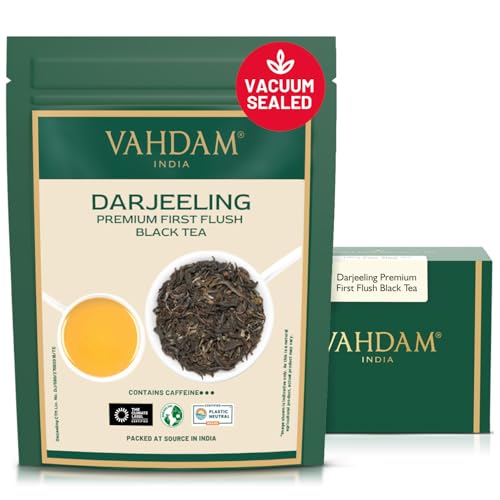
Vahdam First Flush Darjeeling, 3.53 oz
Vahdam
The same spring harvest in a 50-cup pack: the smartest way to find out whether first flush is your tea before buying big.
Bottom line: The sensible first bag of first flush. Fifty-plus cups for around $15 is enough to learn the style properly, and the smaller pack means the tea stays fresh for the time it takes to drink it. If it wins you over, the 12 oz version halves the per-cup cost.
Origin and grade. Same first flush harvest and origin-packing as the 12 oz; smaller freshness-friendly size.
First flush is a commitment of palate, not just money: its pale, floral, almost green profile is a long way from the malty black-tea mainstream, and some drinkers never cross over. This 3.53 oz pack exists for exactly that decision. Fifty-plus cups is a real acquaintance with the style, and at around 30 cents a cup you are paying sampler prices, not sampler markups.
Brew it exactly like the big bag: 190°F, 3 minutes, no milk. If the third cup has you rationing the bag, upgrade to the 12 oz and enjoy the better math.
Who should buy it.
First-time first flush drinkers, and light drinkers who would not finish 12 ounces while it is fresh.
What we don't like.
Per-cup cost is about 25 percent higher than the 12 oz; the pouch is easy to under-measure from without a scale.
- Type
- First flush Darjeeling black tea
- Size
- 3.53 oz loose leaf (50+ cups)
- Caffeine
- Moderate
- Steep
- 3 min at ~190°F
- Best for
- Trying the style fresh
What we like.
- Low-commitment entry to first flush
- Stays fresh at a realistic drinking pace
- Same harvest as the premium pick
Worth noting.
- Higher per-cup cost than the 12 oz
- Small pouch empties fast for daily drinkers

Harney & Sons Darjeeling Sachets, 50 Count
Harney & Sons
Whole-leaf Darjeeling in a pyramid sachet: the no-equipment route to a proper cup, from America's most trusted blender.
Bottom line: If loose leaf is a step too far, Harney's pyramid sachets are the best Darjeeling-in-a-bag we found: real leaf with room to unfurl, an aromatic cup by buyer reports, and Harney's famous consistency. Around 40 cents a sachet is the price of that convenience, and it is worth it.
Origin and grade. Harney & Sons' published sourcing and blending standards; whole-leaf pyramid sachets.
Harney & Sons has spent four decades earning its reputation as America's benchmark specialty blender, and its Darjeeling sachets show the house style: carefully sourced leaf, consistent from box to box, and packaged so the tea actually has space to open up. The cup carries clear muscatel character and a clean, medium body, closer to loose-leaf quality than any flat bag can get.
Fifty sachets at around $20 makes this the practical office-and-travel Darjeeling. Our Harney & Sons review covers the house in full.
Who should buy it.
Sachet loyalists, offices, and travelers who want real Darjeeling without carrying an infuser.
What we don't like.
Roughly triple the per-cup cost of Vahdam's loose leaf, and one sachet strength suits an 8 oz cup, not a big mug.
- Type
- Darjeeling black tea
- Count
- 50 pyramid sachets
- Caffeine
- Moderate
- Steep
- 3-4 min just off the boil
- Format
- Whole-leaf sachets
What we like.
- Loose-leaf-adjacent quality, zero equipment
- Harney's box-to-box consistency
- Real muscatel aroma
Worth noting.
- About 40 cents a cup
- Light for oversized mugs

Vahdam Darjeeling Tea Bags, 100 Count
Vahdam
A hundred pyramid bags of real Darjeeling for around $20: the volume answer for the daily bag drinker.
Bottom line: The best cost-per-cup in bagged Darjeeling: about 20 cents a cup for origin-packed leaf in a pyramid bag. It gives up a little aroma to the loose leaf and a little refinement to Harney, but a hundred bags at this price makes it the clear daily-driver choice for bag drinkers.
Origin and grade. Same farm-direct Darjeeling sourcing as Vahdam's loose leaf, in pyramid bags.
This is the volume play: 100 pyramid bags of the same farm-direct Darjeeling that wins our top spot, traded into bag convenience. The cup is recognizably Darjeeling, aromatic, medium-bodied, with the muscatel edge intact, just slightly less vivid than the loose leaf brewed properly.
One brewing note: pyramid or not, do not boil the life out of it. Water just off the boil and 3 minutes keeps the cup bright instead of bitter.
Who should buy it.
Daily bag drinkers who want real Darjeeling economics, offices, and anyone stocking a shared kitchen.
What we don't like.
A notch less aromatic than the loose leaf; the big box is overkill for occasional drinkers who should buy fresher smaller formats.
- Type
- Darjeeling black tea
- Count
- 100 pyramid bags
- Caffeine
- Moderate
- Steep
- 3 min just off the boil
- Sourcing
- Farm-direct, packed in India
What we like.
- Best bagged cost per cup
- Origin-packed sourcing
- Pyramid bags give leaf room
Worth noting.
- Slightly muted vs loose leaf
- 100 bags outlast peak freshness for light drinkers

Harney & Sons Classic Darjeeling Tin, 20 Sachets
Harney & Sons
Twenty sachets in Harney's signature tin for around $7: the cheapest genuinely giftable tea in this guide.
Bottom line: The tin is the trick: Harney's classic packaging makes a $7 purchase read like a real gift, and the 20 sachets inside are the same quality leaf as the 50-count box. It is also a fine low-commitment personal intro to the style.
Origin and grade. Harney & Sons sourcing in the brand's classic presentation tin.
Harney's classic tins have carried the brand for decades because they solve a real problem: tea that looks as considered as it tastes. Twenty sachets of proper whole-leaf Darjeeling in the black-and-gold tin costs around $7, which makes this the default add-on gift for any tea drinker in your life, and a tidy desk tin for yourself.
The tea itself matches the 50-count sachets: clear muscatel aroma, clean medium body, reliable cup after cup. Pair it with a good infuser or our tea gifts guide for a bigger bundle.
Who should buy it.
Gift buyers, and the Darjeeling-curious who want a proper taste in a package they will keep on the desk.
What we don't like.
Twenty sachets go quickly, and per-cup pricing is nearly triple the loose-leaf winner.
- Type
- Darjeeling black tea
- Count
- 20 sachets in tin
- Caffeine
- Moderate
- Steep
- 3-4 min just off the boil
- Format
- Gift tin
What we like.
- Genuinely giftable at $7
- Same leaf quality as the big box
- Reusable tin
Worth noting.
- Small count
- Mid-pack per-cup cost

Ahmad Tea Darjeeling, 20 Teabags
Ahmad Tea
A legitimate light, aromatic Darjeeling character from a grocery-tier box at around $7.
Bottom line: The cheapest box that still tastes like Darjeeling. Ahmad's version is lighter and simpler than the specialists, but the aromatic, gently dry character of the style survives the flat bag, which is more than most supermarket Darjeelings manage. For around $7 it is the right first handshake with the style.
Origin and grade. Ahmad Tea's UK blending operation; Darjeeling-sourced black tea.
Ahmad Tea consistently punches above its price tier (its English Breakfast wins our value comparisons outright), and its Darjeeling carries the same trick into lighter territory. The cup is aromatic and gently dry with a recognizable muscatel hint, lighter-bodied than the loose-leaf picks but honest about what it is.
Keep the steep short, 2.5 to 3 minutes, and skip the milk. If this cup charms you, Vahdam's loose leaf is the same idea with the volume turned up.
Who should buy it.
Budget shoppers and the curious making first contact with the style.
What we don't like.
Flat bags and broken leaf cap the aroma; serious drinkers will outgrow it in a box or two.
- Type
- Darjeeling black tea
- Count
- 20 bags
- Caffeine
- Moderate
- Steep
- 2.5-3 min just off the boil
- Tier
- Grocery
What we like.
- Real Darjeeling character at $7
- No equipment needed
- Short-steep friendly
Worth noting.
- Broken-leaf bag grade
- Lighter and simpler than the specialists
First flush vs second flush: pick your Darjeeling
Darjeeling's harvests produce genuinely different teas. First flush (late February to April) is the spring picking: pale, floral, lightly oxidized, with a fresh, almost green intensity. Second flush (May to June) is the summer picking that made the region's name: fuller amber cups with the classic ripe muscatel, grape-skin note. Autumn flush rounds out the year with a mellower, darker cup.
Neither is objectively better. Aroma chasers and green-tea crossovers usually fall for first flush; drinkers coming from classic black tea usually prefer the second flush profile, which is what standard-labeled Darjeelings (including our overall winner) mostly deliver. The honest advice: start with a standard Darjeeling, then try a first flush pack and see which direction pulls you.
Why real Darjeeling is worth verifying
Darjeeling is a protected geographical indication, only tea from the region's gardens may legally carry the name, but the world has long 'sold' several times more Darjeeling than the hills grow. The excess is filled with lookalike leaf from elsewhere sold under the name in loosely policed markets.
That is why sourcing transparency ranked so heavily in our research. Vahdam publishes its garden sourcing and packs at origin; Harney & Sons stakes a four-decade specialty reputation on its supply chain; Ahmad is a large blender with a name to protect. When a bargain listing offers 'Darjeeling' with no region detail, no flush, and no sourcing story at a price that seems impossible, believe the price, not the label.
How to brew Darjeeling so it tastes like the reviews
Most disappointing Darjeeling is a brewing casualty. The style is more delicate than breakfast blends, and boiling water plus a five-minute steep flattens its aroma and drags out bitterness. The reliable recipe:
- Water: just off the boil for standard Darjeeling (about 200°F); cooler, around 190°F, for first flush.
- Leaf: one rounded teaspoon per 8 oz cup, or one bag or sachet.
- Time: 3 minutes, 4 at most for standard; 3 for first flush.
- Milk: skip it. Darjeeling's character lives in the aroma milk covers. If you want a milk tea, our breakfast tea guide is the right aisle.
Loose leaf rewards a second, slightly longer infusion from the same leaves, which quietly improves the per-cup math on every loose pick above.
Questions, answered.
What is the best Darjeeling tea?
Vahdam's Darjeeling loose leaf is the best for most people: genuine muscatel character, origin-packed freshness, and about 12 cents a cup from the 12 oz bag. For the style at its aromatic peak, Vahdam's First Flush Darjeeling is the premium pick, and Harney & Sons makes the best sachets for drinkers who skip loose leaf.
Why is Darjeeling called the champagne of teas?
Like champagne, Darjeeling is a legally protected regional name: only tea grown in the Darjeeling district of West Bengal, India can carry it. The nickname also nods to the tea's character, aromatic, light-bodied, with the distinctive grape-like muscatel note, and to its auction prestige, where top first flush lots command some of the highest prices in tea.
What does muscatel mean in Darjeeling tea?
Muscatel describes Darjeeling's signature flavor: a sweet-dry, grape-skin, lightly floral note reminiscent of muscat grapes. It is most pronounced in second flush (summer harvest) teas and is produced partly by leafhopper insects nibbling the leaves, which triggers the chemistry behind the flavor, the same mechanism behind Taiwan's oriental beauty oolong.
Is Darjeeling tea strong in caffeine?
Darjeeling is moderate: roughly 30 to 50 mg per properly brewed cup, a bit below robust Assam-based breakfast blends and around half a typical coffee. First flush, brewed cooler and shorter, tends toward the lower end. It is a reasonable afternoon tea for most caffeine-aware drinkers.
Should you put milk in Darjeeling tea?
Traditionally no. Darjeeling's value is its aroma and delicate muscatel finish, which milk blankets. Standard second flush can tolerate a small splash if you insist, but first flush should always be taken plain. If your daily cup needs milk, an Assam or Irish breakfast blend will make you happier for less money.
Is first flush or second flush Darjeeling better?
They are different rather than ranked. First flush (spring) is pale, floral, and intensely aromatic, closer to a fine oolong. Second flush (summer) is fuller and amber with the classic ripe muscatel note, the traditional Darjeeling profile. Most standard-labeled Darjeelings lean second flush; aroma chasers should try a first flush at least once.
Filed under Buyer's Guide
Part of Tea by Type
More tea worth comparing
Whatever you decide, these are the tea bags our reviews keep ranking on top. Live price check on each.
- Check price

Best Overall.
Twinings English Breakfast - Check price

- Check price

Best Fast Brew.
PG Tips Original - Check price

- Check price

- Check price

Best Green.
Ito En Oi Ocha Green Tea
As an Amazon Associate we earn from qualifying purchases, at no cost to you.
Keep reading.
Vahdam Tea Review
Why the farm-direct model keeps winning our India-origin categories.
Best Black Tea
The full black tea shortlist, from breakfast blends to single origins.
Best Loose Leaf Tea
Our ranked loose-leaf picks across every style.
Harney & Sons Tea Review
The American specialty benchmark, reviewed blend by blend.