Our pick. Numi Organic Tea
Check priceNumi vs Pukka: Which Organic Tea Brand Is Better? (2026)
Two of the most ethical names in tea bags, compared, one a clean-flavored Oakland organic house, the other a UK herbal blender. Here's who should buy which.
By The Best Tea Bags Desk~7 min readUpdated
Quick answer: Both are certified organic and ethically sourced, there's no "cheating" brand here. Numi is Fair Trade / B Corp out of Oakland; Pukka is Fair for Life out of the UK.
Our top pick.Pick Numi for this, the cleanest cup of real, caffeinated tea in either lineup
Numi Organic Tea Gunpowder Green (18 Tea Bags)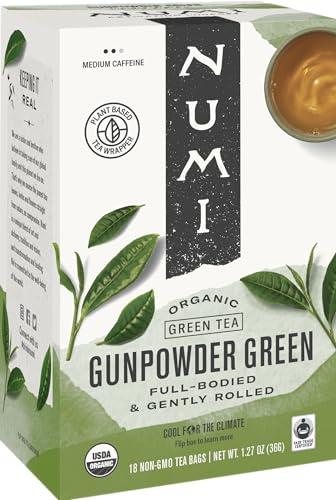
- Price.
- $17.99
- Our rating.
- 4.6 out of 5
Numi's clearest argument: a full-bodied, forgiving gunpowder green that tastes like real fresh leaf, not dusty supermarket green.
Not sure yet? Compare all 2 picks below ↓
Short version: pick the brand by what's in your cup, not by which is "better", because they barely compete. Numi and Pukka are both organic, both ethically sourced, and both far above supermarket tea-bag quality. But they're built around different ideas. Numi is an Oakland house that does real tea, actual green, black, and white leaf, exceptionally cleanly, plus a respected turmeric range. Pukka is a UK blender whose heart is caffeine-free herbal and Ayurvedic-inspired blends, layered and aromatic.
So the honest answer: buy Numi if you want a clean, full-leaf cup of actual tea with caffeine, its gunpowder green is the easiest single tea to recommend in either lineup. Buy Pukka if you want a caffeine-free herbal cup with the blending craft to match, Three Mint is its standout. Most serious tea drinkers end up with both boxes in the cupboard, one for the morning and one for after dinner. Below, we break down organic credentials, ethics, flavor style, value, and exactly who each suits.
The short version.
- Numi's strength is clean, full-leaf real tea (green, black, white) plus turmeric blends, and it's caffeinated. Its gunpowder green is the best value-for-quality cup in either range.
- Pukka's strength is caffeine-free herbal and Ayurvedic-inspired blends, aromatic, layered, and forgiving. Three Mint is the everyday standout.
- Flavor philosophy differs: Numi aims for clean and true-to-leaf; Pukka aims for aromatic and blended. Neither is better, they're different jobs.
- Both cost roughly double a supermarket equivalent. You're paying for organic leaf, fairer sourcing, and better packaging, and in both cases it shows in the cup.
- If you want one of each: Numi gunpowder green for the morning, Pukka Three Mint for after dinner.
| Numi | Pukka | |
|---|---|---|
| Home base | Oakland, California, USA | Bristol, United Kingdom |
| Core strength | Clean, full-leaf real tea (green, black, white) + turmeric range | Caffeine-free herbal & Ayurvedic-inspired blends |
| Flavor philosophy | Clean and true-to-leaf | Aromatic, layered, blended |
| Standout cup | Gunpowder Green | Three Mint |
| Caffeine | Yes, across most of the range | Mostly caffeine-free |
| Organic | Certified organic + Non-GMO Project Verified | Certified organic (Soil Association / EU) |
| Ethics | Fair Trade sourcing; B Corp | Fair for Life certified supply |
| Packaging | Plastic-free, unbleached bags | Foil-wrapped individual sachets |
| Best for | Real-tea drinkers who want a cleaner cup | Caffeine-free, after-dinner, herbal drinkers |
Numi vs Pukka at a glance, what each brand is actually built to do.
Numi Organic Tea Gunpowder Green (18 Tea Bags)
Numi Organic Tea
Numi's clearest argument: a full-bodied, forgiving gunpowder green that tastes like real fresh leaf, not dusty supermarket green.
Bottom line: This is the tea that makes the case for Numi over Pukka if you want caffeine and real leaf. Gunpowder green is tea rolled into tight pellets, which protects the leaf and unfurls into a surprisingly full, slightly smoky cup. Numi's version is clean and well-made, with none of the dusty, grassy bitterness that sinks cheap green bags. Rolled gunpowder is a forgiving style, it won't turn punishingly astringent if you slightly over-steep, and it shows off exactly what Numi's organic sourcing buys you: a cup that tastes like fresh leaf. Pukka doesn't really compete here; this is Numi's home turf.
Origin and grade. Certified organic and Non-GMO Project Verified; rolled green tea leaves sourced through Numi's transparent, fair-labor supply program. Plastic-free, unbleached tea bag.
Gunpowder green is one of the smartest formats in tea: rolling the leaves into dense pellets shields them from air and light, so the tea stays fresher and steeps into something fuller and rounder than loose, flat green tea. Numi's version delivers exactly that, a cup with real body, a clean vegetal backbone, and a faint smoky note that gives it character without tipping into the burnt, acrid territory that ruins lower-grade gunpowder.
The key selling point is how forgiving the style is. Green tea is notoriously easy to wreck with water that's too hot or a steep that runs too long, turning the cup bitter and astringent. Tightly rolled gunpowder tolerates a wider margin because the pellets unfurl gradually, so it generally stays drinkable when the water runs a little hot or the steep runs long, where a cheaper green would go harsh.
This is also where the Numi-versus-Pukka split is clearest: if you want actual tea leaf with caffeine, this is the side to be on. Pukka's range is built around caffeine-free herbal blends, so a true green like this simply isn't its game.
Green tea is among the most-studied beverages for everyday wellness, and is traditionally valued for a gentle, sustained lift; and a quality whole-leaf gunpowder like Numi's typically delivers that with less bitterness than commodity green bags. (Enjoy it as a daily cup, not a remedy.)
Brew with water just off the boil (around 175°F / 80°C) for 2 to 3 minutes for the cleanest cup. It re-steeps well, the pellets have more to give on a second infusion, which improves the real cost-per-cup. This is the blend that best justifies Numi's price.
Who should buy it.
Everyday green tea drinkers who want a cleaner, fuller cup than supermarket green bags, anyone who finds plain green tea too bitter or grassy, and people who specifically want caffeine, which rules out most of Pukka's range.
What we don't like.
It's still a smoky-leaning green, if you prefer the bright, grassy, almost sweet profile of a sencha or a Japanese green, this rounder, smokier style won't be your favorite.
- Caffeine
- Medium (roughly 25-35 mg per cup)
- Bags per box
- 18, plastic-free unbleached bags
- Tea type
- Rolled gunpowder green tea
- Certification
- Organic; Non-GMO Project Verified; B Corp
- Steep
- 2-3 min at ~175°F / 80°C
What we like.
- Full-bodied and clean with a pleasant smoky depth
- Forgiving, resists bitterness if slightly over-steeped
- Re-steeps well, improving cost-per-cup
- Genuinely plastic-free, organic, and B Corp sourced
- Real, caffeinated tea leaf, the thing Pukka doesn't do
Worth noting.
- Smoky style won't suit fans of bright grassy greens
- Still costs more than a basic supermarket green tea

Pukka Three Mint Organic Herbal Tea (4 x 20 Tea Bags)
Pukka Herbs
Pukka's clearest argument: a bright, naturally sweet three-way mint blend that's the easiest caffeine-free tea to recommend in either range.
Bottom line: This is the tea that makes the case for Pukka over Numi when you want a caffeine-free, herbal cup. Three Mint pairs peppermint, spearmint, and field mint into something cooling and crisp without the sharp, almost medicinal edge that single-note peppermint bags can have. It's naturally caffeine-free, has zero added sugar yet tastes faintly sweet, and is forgiving on steep time, you can leave the bag in and it won't turn bitter. Numi makes fine herbals too, but blending aromatic herbal cups like this is Pukka's whole identity, and it shows.
Origin and grade. Certified organic (Soil Association / EU organic); peppermint, spearmint and field mint sourced through Pukka's Fair for Life certified supply program.
Three Mint is Pukka's most universally likeable tea, and the one where the blending craft is most obvious in the cup. Single-herb peppermint can be bracing to the point of harsh; here the spearmint rounds it out with a softer, slightly sweet note, and the field mint adds a cooling lift. The result is a cup that reads as refreshing rather than aggressive.
Aroma is the tell with mint: you want it bright and oil-rich, the kind of fragrance you get from properly stored, recently milled mint rather than dusty leaf that's been sitting in a warehouse. That freshness is partly the organic whole-leaf cut and partly Pukka's foil-wrapped individual sachets, which protect the volatile oils that make mint taste like mint.
This is the flip side of the Numi-versus-Pukka split: if you want a layered, aromatic, caffeine-free herbal cup, this is the side to be on. Numi leans toward clean, true-to-leaf real teas; Pukka leans toward blended herbal craft, and Three Mint is the blend where that craft is easiest to taste.
Peppermint tea is one of the most-studied herbal infusions for everyday digestive comfort: peppermint has traditionally been used to support a settled stomach, and Three Mint is an easy, additive-free way to get a peppermint-forward cup after a meal. (It's a pleasant after-dinner habit, not a treatment.)
Steep 3 to 5 minutes in just-boiled water. It holds up to a longer steep without going bitter, and it's pleasant iced. For an after-dinner, no-caffeine, no-sugar default, it's hard to do better at any price.
Who should buy it.
Anyone who wants a reliable caffeine-free everyday cup, after-dinner drinkers, people who find plain peppermint too sharp, and herbal-tea fans who want blending craft rather than single-note bags.
What we don't like.
It's still mint, if you dislike mint there's nothing here for you, and the per-bag price is roughly double a supermarket peppermint tea for what is, fundamentally, mint.
- Caffeine
- None (naturally caffeine-free)
- Bags per box
- 20 individually wrapped
- Key herbs
- Peppermint, spearmint, field mint
- Certification
- Organic; Fair for Life
- Steep time
- 3-5 minutes
What we like.
- Balanced, naturally sweet mint, not harsh
- Forgiving steep, won't turn bitter
- Caffeine-free and zero added sugar
- Excellent fresh aroma from foil-wrapped bags
- Herbal blending craft Numi's lineup doesn't focus on
Worth noting.
- Roughly 2x the price of a basic peppermint tea
- Only appeals if you like mint
Organic and ethics: a real tie
This is the rare comparison where neither brand is cutting corners, so don't let "organic" be your deciding factor, both earn it. Numi is certified organic and Non-GMO Project Verified, and it's a B Corp operating out of Oakland with a transparent, fair-labor sourcing program. Pukka is certified organic (Soil Association / EU organic) and runs a Fair for Life certified supply chain out of the UK.
If you're choosing purely on conscience, it's a genuine tie. Both go meaningfully further than mass-market tea on certification, sourcing transparency, and packaging, Numi with plastic-free, unbleached bags, Pukka with foil-wrapped sachets that protect aroma. The decision should come down to what you actually want to drink, not which brand is "cleaner." They both are.
Herbal vs. broader range: the real difference
Here's the line that actually separates them. Numi is a tea house first. Its core is real, caffeinated leaf, green, black, white, done cleanly, plus a well-regarded turmeric range that bridges into herbal-functional territory. The gunpowder green above is the clearest example of what it does best.
Pukka is a herbal blender first. Its identity is caffeine-free herbal and Ayurvedic-inspired blends, mint, chamomile, ginger, licorice, and combinations of them, built to be aromatic and layered. Three Mint is the easiest entry point, but the whole range reflects that blending-led philosophy.
So the practical question isn't "which brand is better", it's "do I want real tea with caffeine, or a caffeine-free herbal cup?" Numi owns the first; Pukka owns the second. If you want both, that's the most common (and sensible) outcome.
Flavor style: clean vs. aromatic
Even within their overlap, the two brands taste like different design goals. Numi chases clean and true-to-leaf, you should taste the actual tea, with as little muddiness as possible. The gunpowder green is full but precise; nothing is hiding bitterness or thinness behind added flavor.
Pukka chases aromatic and blended, the goal is a fragrant, rounded cup where several herbs combine into something more than their parts. Three Mint is exactly that: three mints layered so the result is cooling and softly sweet rather than sharp.
If you love the purity of a single, well-made leaf, you'll lean Numi. If you love a fragrant, comforting, can't-quite-place-it cup, you'll lean Pukka. Neither approach is wrong; they're aimed at different moments in the day.
Value: both worth it, for different reasons
Both brands cost roughly double a supermarket equivalent, and in both cases the cup explains why, organic leaf, fairer sourcing, and better packaging. Numi's gunpowder green stretches its value further because it re-steeps well; a second infusion meaningfully lowers your real cost-per-cup, which a herbal bag generally won't match.
Pukka's value is in reliability and forgiveness, Three Mint won't turn bitter if you forget the bag, works hot or iced, and gives you a genuinely additive-free, caffeine-free option that's hard to find at this quality. Per cup, they're in the same ballpark; you're choosing what kind of cup you want, not hunting for the cheaper box.
Who should buy which
- Pick Numi if you want real, caffeinated tea, especially green, done cleanly, you enjoy a fuller, slightly smoky green, or you want a brand whose strength is true-to-leaf flavor. Start with the Gunpowder Green.
- Pick Pukka if you want caffeine-free herbal cups with blending craft, you drink tea after dinner, or you find single-note herbal bags too sharp. Start with Three Mint.
- Buy both if (like most regular tea drinkers) you want caffeine in the morning and something soothing and caffeine-free at night. Numi gunpowder green plus Pukka Three Mint covers the whole day, and neither will disappoint you.
Questions, answered.
Is Numi or Pukka better?
Neither is universally better, they're built for different cups. Numi is best for clean, full-leaf real tea (especially green) with caffeine. Pukka is best for caffeine-free herbal and Ayurvedic-inspired blends. If you want caffeine and true tea flavor, choose Numi; if you want a soothing, aromatic, caffeine-free cup, choose Pukka.
Are both Numi and Pukka actually organic?
Yes. Numi is certified organic and Non-GMO Project Verified, and is a B Corp. Pukka is certified organic under the Soil Association / EU organic standard. Both also run ethical sourcing programs, Numi with fair-labor/Fair Trade sourcing, Pukka with Fair for Life certification, so organic credentials are essentially a tie.
Does Pukka have caffeinated teas like Numi?
Pukka's identity is caffeine-free herbal blends, and most of its lineup is caffeine-free. Numi, by contrast, builds around real caffeinated leaf, green, black, and white tea. If caffeine is the priority, Numi is the more natural fit.
Which is better for after dinner?
Pukka Three Mint. It's naturally caffeine-free, has zero added sugar, tastes faintly sweet, and is forgiving on steep time. Peppermint has traditionally been used to support a settled stomach, which makes it a pleasant after-meal habit, enjoyed as a daily cup, not a treatment.
Are they worth roughly double the price of supermarket tea?
In both cases the cup justifies the cost: organic leaf, fairer sourcing, and better packaging. Numi's gunpowder green stretches its value further because it re-steeps well, lowering real cost-per-cup. Pukka's value is reliability, a high-quality, additive-free, caffeine-free option that's genuinely hard to match at the supermarket.
Filed under Comparison
Part of Tea Brand Reviews
More tea worth comparing
Whatever you decide, these are the tea bags our reviews keep ranking on top. Live price check on each.
- Check price

Best Overall.
Twinings English Breakfast - Check price

- Check price

Best Fast Brew.
PG Tips Original - Check price

- Check price

- Check price

Best Green.
Ito En Oi Ocha Green Tea
As an Amazon Associate we earn from qualifying purchases, at no cost to you.
Keep reading.
Numi Tea Review
Our full take on Numi's clean, full-leaf real teas and turmeric range, and which blends are worth it.
Pukka Tea Review
A closer look at Pukka's caffeine-free herbal and Ayurvedic-inspired blends, and where the blending craft pays off.
Best Tea for Sleep
Our picks for a calming, caffeine-free wind-down cup, including how the big organic herbal brands stack up.